
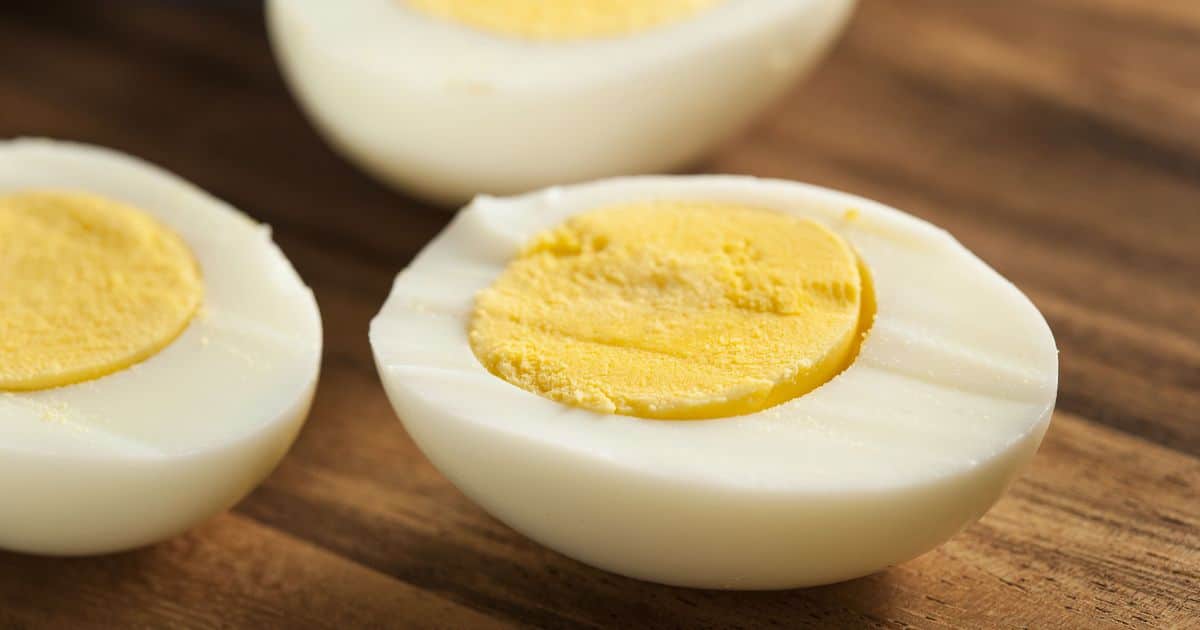
Hard-boiled egg yolk turns green or gray because of a chemical reaction triggered by overcooking. Hydrogen sulfide from the egg white oxidizes the iron in the yolk, forming a dark ring around it. The good news: it looks unappetizing, but it poses zero health risk.
You've cracked open a hard-boiled egg and found a greenish-gray ring circling the yolk. The instinct is to wonder whether something went wrong, whether the egg was bad, or whether eating it is a mistake. None of those concerns are warranted. What you're looking at is pure chemistry, and understanding it takes less than two minutes.
Eggs are among the most nutritious foods available, packed with protein, omega-3 fatty acids, vitamins, and minerals. If you want to get the most out of them, knowing how to cook them correctly matters more than most people realize.
The green ring around hard-boiled egg yolk is a chemical reaction
The discoloration isn't mold, it isn't spoilage, and it has nothing to do with the freshness of the egg before cooking. The culprit is hydrogen sulfide, a sulfur compound naturally present in egg whites. When an egg is cooked for too long, heat causes the white to release this gas, which then migrates toward the yolk.
Iron oxidation: the mechanism behind the gray yolk
The yolk contains iron. When hydrogen sulfide reaches it, it triggers an oxidation reaction. The iron darkens, forming a layer that appears green, gray, or even black depending on the intensity of the overcooking. The ring sits right at the boundary between the white and the yolk, which is exactly where the two compounds meet during cooking.
The same phenomenon can happen even without extreme heat exposure. If a hard-boiled egg is peeled or cut open too long before being eaten, the reaction has time to develop at room temperature. Timing matters not just during cooking, but right up until the moment you serve the egg.
A green or gray yolk in a hard-boiled egg is safe to eat. The color change is a chemical reaction between hydrogen sulfide and iron — not a sign of bacterial contamination or spoilage.
Is a green yolk safe to eat?
Yes, completely. The oxidized iron compound that forms the ring is not toxic. There is no bacterial risk associated with this color change, no loss of nutritional value worth worrying about, and no reason to throw the egg away. The only real consequence is aesthetic: the egg looks less appealing on a plate, which matters if you're preparing a dish where presentation counts.
For those who eat eggs regularly, including athletes and people who don't consume meat or fish and rely on eggs as a primary protein source, avoiding the green ring is mostly about texture and visual quality rather than safety.
The exact cooking method to avoid a discolored yolk
The fix is straightforward. Precision in timing is everything. Overcooking is the direct cause of the iron oxidation that produces the green or gray ring, so controlling how long the egg spends in hot water solves the problem entirely.
The 9-minute rule for a perfect hard-boiled egg
The recommended cooking time is exactly 9 minutes in gently simmering water. Not a rolling boil, not 10 or 12 minutes "just to be safe." Nine minutes in water that is frémissante (barely bubbling) gives you a yolk that is fully set but still bright yellow, and a white that is firm without becoming rubbery.
If you're experimenting with other egg cooking methods, it's worth knowing that cooking eggs in an air fryer follows a similarly precise timing logic to preserve the texture of the yolk.
The ice bath: the step most people skip
The second step is just as important as the cooking time. The moment the 9 minutes are up, the eggs must go directly into a bowl filled with cold water and ice cubes. This stops the cooking process immediately. Without this step, residual heat inside the egg continues to drive the hydrogen sulfide toward the yolk even after the egg is removed from the pot, which can still trigger the oxidation reaction.
Leave the eggs in the ice bath until they are completely cold before peeling. And once peeled, cut or slice them just before serving, not in advance.
To prevent a green or gray yolk: cook for exactly 9 minutes in simmering water, transfer immediately to an ice bath, cool completely before peeling, and peel or slice just before serving.
How many hard-boiled eggs can you eat per day?
The green yolk question often leads to a broader one: how many eggs is too many? The general nutritional guidance for adults sits around 2 eggs per day as a comfortable daily intake. But the Anses (France's national food safety agency) has noted that consumption can go as high as up to 10 eggs per day without established harm for healthy individuals.
eggs per day: the maximum consumption level cited by Anses for healthy adults
That upper figure is relevant mostly for specific populations. Athletes with high protein needs, or people who eat neither meat nor fish, sometimes rely heavily on eggs to meet their daily requirements. In those cases, eggs deliver a particularly efficient combination of complete protein, omega-3s, and fat-soluble vitamins in a single, inexpensive package.
If you're building meals around eggs as a nutritional anchor, it's also worth exploring how preparation method affects nutrient absorption. Dietitians have specific recommendations on how to eat eggs for maximum vitamin D uptake, which is one of the nutrients that varies most depending on cooking technique.
For those looking to incorporate more egg-based meals into a balanced routine, light and balanced dinner ideas can offer practical inspiration without overcomplicating the process.
And if you've ever wondered what to do with eggs beyond boiling them, freezing eggs is an option that science actually supports under the right conditions, which is useful to know when you're buying in bulk.
The bottom line on the green yolk is simple: it's a timing problem, not a food safety crisis. Master the 9-minute cook plus ice bath method, peel at the last moment, and the discoloration disappears entirely. The egg stays what it's always been: one of the most versatile and nutrient-dense foods you can put on a plate.