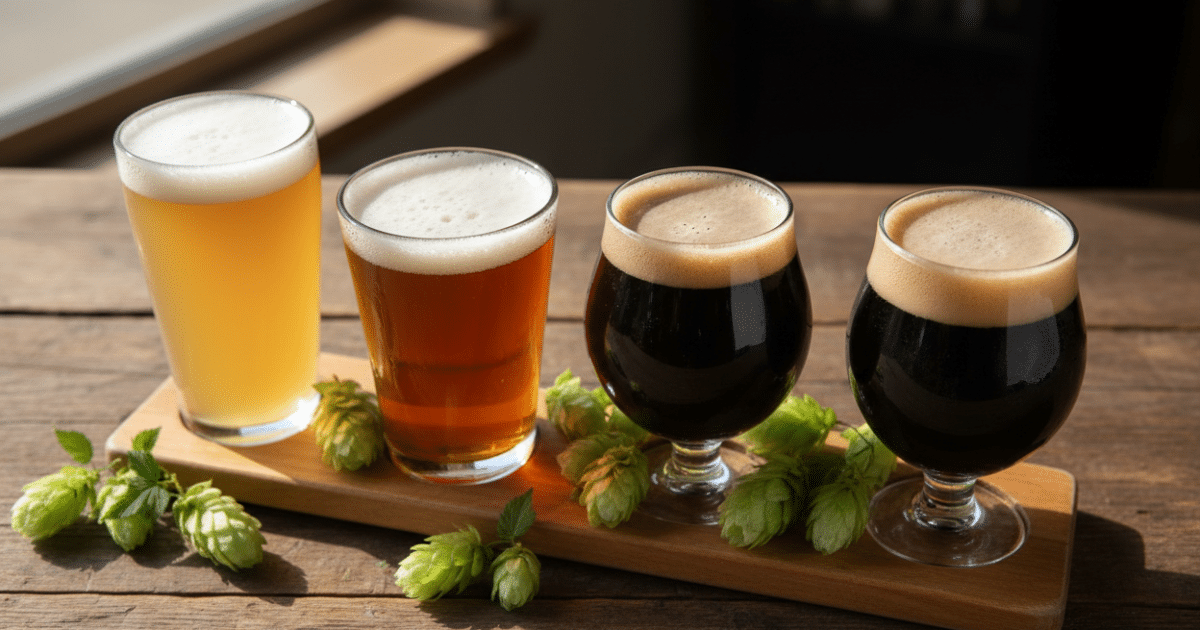
Ale is beer — but not all beer is ale. The distinction comes down to yeast, fermentation temperature, and the flavor profile that results. Understanding what separates ale from lager (and every style in between) is the foundation for drinking, pairing, and appreciating beer with any real depth.
Walk into a well-stocked bar or a craft brewery taproom, and the menu can feel overwhelming. IPAs, stouts, pilsners, wheat beers, sours — the terminology multiplies fast. But beneath all that variety, there's a clean, logical framework that organizes every beer style ever brewed. The key distinction between ale and beer isn't a matter of strength, color, or even bitterness. It's biology, and it shapes everything else.
Beer is the category, ale is a subcategory
This is where most confusion starts. People use "ale" and "beer" as if they were opposites, when in reality, ale is a type of beer. Beer is the umbrella term for any fermented beverage made from malted grain, water, hops, and yeast. Under that umbrella sit two major families: ales and lagers. Every beer you've ever had belongs to one of those two groups.
The word "beer" on its own doesn't tell you much about what's in the glass. A crisp Czech pilsner is beer. A rich English porter is beer. A hazy New England IPA is beer. What distinguishes them at the most fundamental level isn't the grain bill or the hop variety — it's the type of yeast used and the conditions under which fermentation happens.
What makes a lager a lager
Lagers ferment at cold temperatures, typically between 35°F and 50°F (2°C to 10°C), using bottom-fermenting yeast strains from the Saccharomyces pastorianus family. The yeast sinks to the bottom of the fermentation vessel and works slowly, producing a clean, crisp, relatively neutral flavor profile. Lagers also undergo a conditioning phase called "lagering" (from the German word for "storage"), during which the beer rests cold for weeks or months. The result is the kind of smooth, refreshing beer that dominates global commercial production — think Heineken, Budweiser, or Stella Artois.
What makes an ale an ale
Ales use top-fermenting yeast, specifically strains of Saccharomyces cerevisiae, and ferment at warmer temperatures, generally between 60°F and 75°F (15°C to 24°C). The yeast rises to the top of the fermenting wort, works faster, and produces a much wider range of flavor compounds — esters, phenols, and other aromatic molecules that give ales their characteristic complexity. Ales are typically ready to drink sooner than lagers, and their flavor profiles range from fruity and floral to roasty and bitter, depending on the style.
The ingredients that shape ale's character
The four core ingredients of beer — water, malted barley, hops, and yeast — are the same for ales and lagers. But the way each ingredient is selected and combined shifts dramatically depending on the style being brewed.
Malt: the backbone of flavor
In ales, the malt bill (the combination of grains used) tends to be more assertive than in most lagers. Brewers working with ales often incorporate specialty malts — crystal malts, chocolate malts, roasted barley — that contribute sweetness, caramel notes, dark fruit flavors, or roasted bitterness. A traditional English bitter gets its amber color and toffee character from crystal malt. A stout owes its near-black color and coffee-like bitterness to heavily roasted barley.
Lager malt bills, by contrast, lean toward pale base malts that let the clean fermentation character of the yeast shine through. The grain is still central, but it plays a supporting role rather than a starring one.
Hops: bitterness, aroma, and preservation
Hops function the same way in ales and lagers — they balance sweetness, add bitterness, contribute aroma, and act as a natural preservative. But ale brewing has historically embraced a wider variety of hopping techniques. Dry hopping, where hops are added after fermentation to maximize aroma without adding bitterness, is almost exclusively an ale technique. It's what gives a New England IPA its explosive tropical fruit nose, or a pale ale its fresh, resinous character.
Yeast: the real differentiator
Yeast is where the ale-versus-lager distinction becomes most tangible in the glass. Ale yeast strains are prolific producers of esters — organic compounds that create fruity aromas like banana, apple, pear, and stone fruit. Different ale yeast strains produce wildly different ester profiles. The yeast used in a Belgian witbier produces clove and banana notes. An English pale ale yeast might produce subtle stone fruit and a slight nuttiness. An American ale yeast is bred to be relatively neutral, letting hops and malt take center stage.
Some craft breweries also work with wild or mixed-fermentation yeast strains — including Brettanomyces — to produce funky, tart, or barnyard-like flavors in styles like saison, lambic, and Flanders red ale. These fall under the ale umbrella but represent a fermentation category of their own.
The fermentation process and why temperature changes everything
The difference in fermentation temperature between ales and lagers isn't just a technical detail — it's the engine that produces flavor. Warmer fermentation accelerates yeast activity and encourages the production of those complex aromatic compounds that define ale styles. Cooler fermentation slows everything down, suppresses ester production, and yields the clean, neutral profile that lager drinkers expect.
Fermentation speed and conditioning time
Ales typically complete primary fermentation in one to two weeks. Some styles, like a simple pale ale or a hefeweizen, can be packaged and ready to drink within two to three weeks of brewing. Lagers, by contrast, require several additional weeks — sometimes months — of cold conditioning to mellow out any off-flavors and develop their characteristic smoothness. This longer production timeline historically made lagers more expensive and resource-intensive to produce, which is part of why ale dominated brewing in Britain and Belgium for centuries before refrigeration technology made large-scale lager production practical.
Open vs. closed fermentation vessels
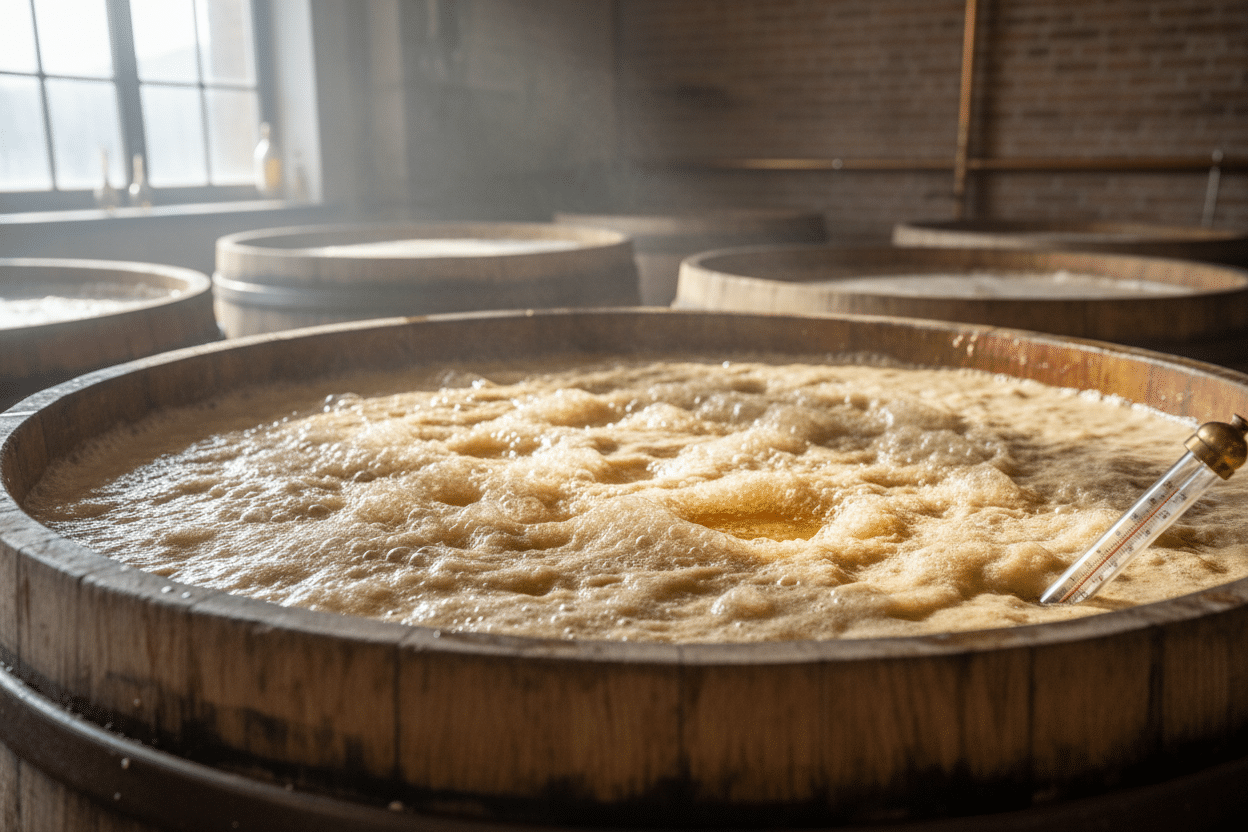
Traditional ale brewing often uses open fermentation vessels, where the yeast rises to the surface and forms a thick, creamy head. This method is still used by some British breweries for cask ales and is considered a factor in developing certain flavor characteristics. Lager fermentation happens in closed, pressurized tanks at controlled cold temperatures. Modern craft breweries increasingly use conical fermenters for both ale and lager production, but the temperature difference remains the defining variable.
Serving temperature matters more than most drinkers realize. Ales are best served between 50°F and 60°F (10°C to 15°C), slightly warmer than lagers. Serving a complex stout or a Belgian ale ice-cold suppresses the aromatic compounds that make the beer interesting.
The major ale styles and what sets them apart
The diversity within the ale family is staggering. From a light, hazy witbier to a 12% imperial stout, every one of these is an ale — unified by top-fermenting yeast and warm fermentation, differentiated by everything else.
British ale traditions
British brewing produced some of the most enduring ale styles in the world. Pale ales and bitters are the workhorses of the English pub — amber to copper in color, moderate in alcohol (typically 3.5% to 5.5% ABV), with a balanced malt-hop character and often a dry, slightly fruity finish. Porters and stouts emerged from London's 18th-century brewing scene and represent the dark end of the British ale spectrum. A well-made stout like Guinness delivers roasted grain flavors, a creamy texture, and a dry finish — a profile that has nothing to do with sweetness despite what many first-time drinkers expect. If you're curious about the caloric content of a pint of Guinness, the numbers may surprise you.
Belgian ales: complexity as a philosophy
Belgian brewing takes ale yeast expressiveness to its logical extreme. Saisons, tripels, dubbels, and witbiers are all ales, and they all rely heavily on yeast character to define their flavor. A Belgian tripel can reach 9% to 10% ABV while remaining deceptively light in color and body, with spicy phenolic notes and a dry, champagne-like carbonation. A witbier, brewed with unmalted wheat and spiced with coriander and orange peel, is one of the most food-friendly beers in existence. Belgian brewing philosophy treats yeast not as a neutral processing agent but as an active flavor ingredient.
American craft ale styles
The American craft beer movement — which exploded from the 1980s onward — is overwhelmingly an ale story. American brewers took British and Belgian templates and pushed them harder, particularly with hops. The American IPA became the defining style of the craft movement: aggressively bitter, heavily dry-hopped, resinous, and aromatic. From there, the style evolved into double IPAs, session IPAs, and the now-ubiquitous New England IPA, which prioritizes soft bitterness and intense tropical fruit aroma over the sharp bitterness of its West Coast cousin. American craft brewing also revived or invented styles like the American amber ale, the American wheat, and the American barleywine — all ales, all pushing the boundaries of what the category can express.
- Faster to brew and condition
- Wider flavor diversity across styles
- More expressive yeast character
- Better suited to food pairing complexity
- Dominant in craft beer culture
- Require longer cold conditioning
- More limited flavor range by design
- Less forgiving of ingredient quality
- Historically harder to produce without refrigeration
- Often misunderstood as the default “beer”
Pairing ales with food: a practical guide
Ales are, broadly speaking, the more food-friendly beer family. Their complexity, carbonation, and range of flavor profiles give them more pairing versatility than the clean neutrality of most lagers. But pairing beer with food follows the same logic as pairing wine — balance, complement, or contrast.
Matching intensity and flavor weight
The first rule of ale pairing is matching intensity. Light, effervescent ales like witbiers and pale ales work beautifully with delicate dishes — steamed mussels, fresh goat cheese, grilled fish, light salads with citrus dressing. The beer's carbonation cuts through richness, and its subtle fruit and spice notes complement rather than overwhelm. Just as you'd consider the balance of flavors when crafting a cocktail — say, when making a classic rum punch — the goal with beer pairing is harmony between the drink and the dish.
Heavier ales demand heavier food. A robust porter or stout pairs naturally with braised meats, aged cheeses, oysters, or chocolate-based desserts. The roasted bitterness of a stout mirrors the caramelized crust of a seared steak or the bitterness of dark chocolate. An imperial stout, with its intense sweetness and alcohol warmth, functions almost like a digestif alongside a rich cheese board.
IPAs and spiced food
The hop-forward intensity of IPAs makes them one of the few beverages that genuinely hold their own against spicy food. The bitterness of the hops provides a counterpoint to capsaicin heat, while the aromatic complexity of the dry hops adds a layer of flavor that complements the spice blend in dishes like Thai curry, Mexican tacos, or Indian-spiced grilled chicken. This is a pairing that lagers simply can't replicate — their clean neutrality gets lost against bold spicing.
Belgian ales and cuisine
Belgian ales occupy a unique pairing space. A saison, with its peppery yeast character and dry finish, is one of the most versatile food beers in existence — it works with everything from roast chicken to hard-rind cheeses to fresh vegetables. A Belgian dubbel, with its dark fruit and caramel notes, pairs naturally with duck confit, lamb, or dishes with a touch of sweetness. The effervescent, citrusy character of a witbier makes it a natural companion for light summer dishes in the same way a strawberry daiquiri cuts through heat on a warm afternoon — refreshing, aromatic, and palate-cleansing.
The diversity of the ale family means there's a style suited to virtually every dish and every occasion. Lagers have their place — particularly with fried food, where their clean carbonation excels — but ales offer a depth of pairing possibility that reflects the complexity of the craft beer styles themselves. The distinction between ale and beer isn't just a taxonomy exercise. It's the key to understanding why one glass tastes so radically different from another, and how to choose the right beer for what's on the plate.