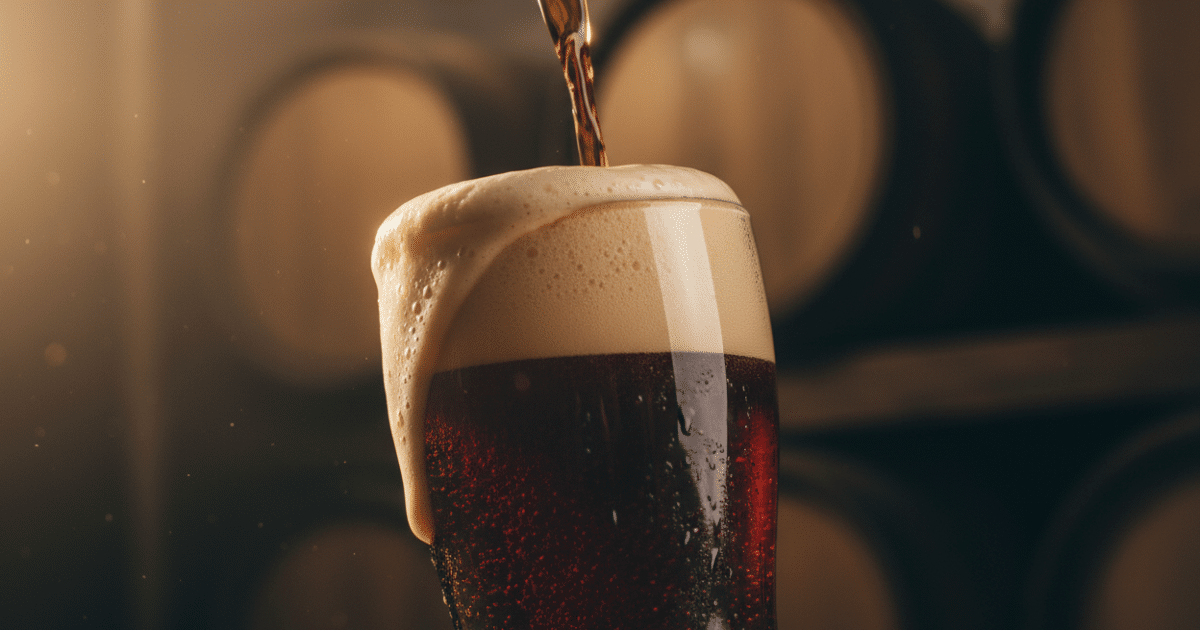
Stout beer is defined by its dark roasted malt character, its creamy texture, and a flavor complexity that goes far beyond simple bitterness. It's one of the most diverse beer styles in existence, spanning everything from bone-dry Irish pints to thick, barrel-aged imperial monsters. Understanding what makes a stout a stout means looking past the color and into the grain bill, the brewing process, and the centuries of craft behind every glass.
Dark, rich, and unmistakably bold — stout beer has earned its reputation as one of the most distinctive styles in the world of beer culture. But "stout" is not a single thing. It's a family of styles, a spectrum of intensities, and a tradition that has been evolving since the early 18th century. Behind every sip lies a brewing philosophy rooted in roasted malts, careful fermentation, and a willingness to push flavor in directions that lighter beers simply can't reach.
The question "what is considered a stout beer?" is deceptively simple. The honest answer involves history, ingredient science, and a taxonomy of substyles that continues to expand with every new wave of craft brewing innovation.
The origins of stout beer run deeper than Guinness
Most people associate stout with Guinness, and that association isn't wrong — but it's incomplete. The story of stout begins in 18th-century England, where the word "stout" was used as an adjective meaning strong or robust. A "stout porter" was simply a stronger, more full-bodied version of porter, the dominant beer style of the era. Over time, the modifier became the name, and stout carved out its own identity.
From porter to stout: a gradual divergence
Porter itself emerged in London around the 1720s, brewed with heavily kilned brown malts that gave it its characteristic dark color and roasted notes. Brewers began producing stronger variants for export and for customers who wanted more intensity in the glass. These stronger porters — stout porters — became so popular that they eventually separated from their parent style entirely.
By the 19th century, Irish brewers, most notably Arthur Guinness, had refined the dry stout into a style of its own. The Irish interpretation leaned toward a drier finish, lower alcohol, and a distinctive roasted bitterness that came from unmalted roasted barley rather than malted grain. This single ingredient decision is what gives Irish dry stout its signature sharp, coffee-like edge — and what separates it from English porter to this day.
Stout's place in global beer culture
Stout spread beyond the British Isles through trade routes and colonialism. Tropical stouts emerged in the Caribbean and parts of Africa, brewed with higher alcohol content to survive long sea voyages. Russian Imperial Stout was developed specifically for export to the court of Catherine the Great, requiring exceptional strength to withstand the Baltic crossing. These export imperatives shaped entire substyles that still exist today.
The characteristics that define a stout beer
What makes a stout beer recognizable is a combination of grain selection, color, mouthfeel, and flavor profile. No single characteristic is sufficient on its own — it's the convergence of several elements that places a beer firmly in stout territory.
The role of roasted malts in stout brewing
The defining ingredient in virtually every stout is roasted malt or roasted barley. These grains are kilned at high temperatures until they develop deep caramelization, producing flavors of dark chocolate, espresso, ash, and sometimes a subtle smokiness. The degree of roasting, the proportion of roasted grain in the grain bill, and whether the brewer uses malted or unmalted barley all dramatically affect the final flavor.
A typical stout grain bill will include:
- Base malt (usually pale malt or lager malt) as the fermentable foundation
- Roasted barley or black patent malt for color and bitterness
- Crystal malts for sweetness and body
- Specialty grains such as oats, wheat, or chocolate malt depending on the substyle
The mouthfeel of a stout is another defining trait. Most stouts are medium to full-bodied, with a creaminess that comes either from oats, from nitrogen carbonation (as in the classic Guinness draught pour), or from residual sugars left by a lower attenuation fermentation.
Flavor profiles: what stout actually tastes like
Stout flavors cluster around a core of roasted bitterness, but the range within that core is enormous. A dry Irish stout delivers sharp coffee and dark toast with minimal sweetness. An oatmeal stout leans toward chocolate and cream, with a silky texture that rounds out the bitterness. A Russian Imperial Stout can present notes of dark fruit, molasses, vanilla, and even leather, with an alcohol warmth that lingers long after the sip.
Hop character in stouts is generally restrained. Bitterness is present — sometimes assertively so — but it typically comes from the roasted grain rather than from heavy hop additions. This distinguishes stout from other dark beers like schwarzbier or dunkel, where roasted notes are softer and hop character plays a more prominent role.
The color of a stout is measured on the Standard Reference Method (SRM) scale. Most stouts fall between 30 and 40+ SRM, giving them their characteristic near-black appearance. But color alone doesn’t define the style — a beer can be dark without being a stout.
The main types of stout beer each occupy distinct territory
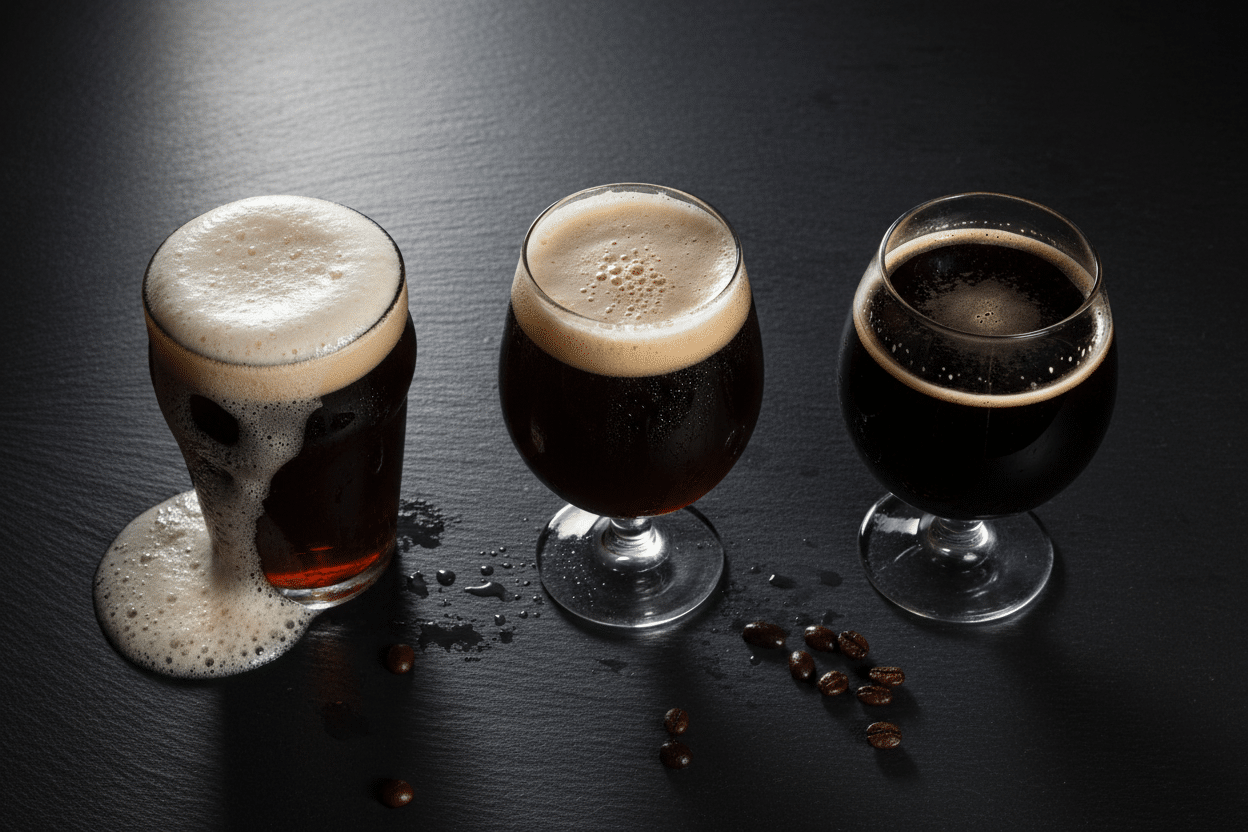
"Stout" covers a wide range of substyles, and treating them as interchangeable is a mistake. Each type has its own brewing logic, its own flavor targets, and its own drinking context.
Dry stout and oatmeal stout: the accessible end of the spectrum
Dry stout (also called Irish stout) is the most widely consumed stout style globally. Characterized by a dry, roasty finish and relatively low alcohol (typically 4–5% ABV), it's designed for sessionability. The bitterness is sharp but not overwhelming, and the body is lighter than most people expect from a dark beer. It's a style built for volume — meant to be drunk by the pint over an evening, not sipped slowly.
Oatmeal stout takes a different approach. The addition of oats to the grain bill introduces a silky, almost velvety texture that softens the roasted edges. Oatmeal stouts tend to be sweeter and more approachable, with flavors of milk chocolate and cream alongside the expected coffee notes. Alcohol content typically sits between 4.5% and 6% ABV, making them slightly more substantial than dry stouts without entering heavy-beer territory.
Milk stout, foreign extra stout, and imperial stout
Milk stout (or sweet stout) uses lactose, an unfermentable sugar derived from milk, to add sweetness and body. The result is a beer that leans heavily toward dessert territory — think chocolate milk or coffee with cream. Lactose doesn't ferment, so it stays in the finished beer as residual sweetness, creating a rich, smooth profile that appeals to drinkers who find dry stouts too austere.
Foreign extra stout sits in the middle of the strength spectrum, typically ranging from 6% to 8% ABV. Originally brewed for export to tropical markets, these stouts combine the roasted character of dry stout with more alcohol, more body, and often a slight fruity ester character from the yeast. They're more complex than session stouts but more approachable than imperial versions.
Russian Imperial Stout is the extreme end of the style. At 8% to 12%+ ABV, these beers are intensely complex, often aged in bourbon or wine barrels, and built for slow contemplation rather than casual drinking. The flavor profile can include dark fruits, vanilla, tobacco, coconut from the oak, and a warming alcohol presence that makes them genuinely comparable to spirits-adjacent experiences.
- Exceptional flavor complexity from roasted malts
- Wide substyle range from sessionable to barrel-aged
- Pairs naturally with rich, savory, and sweet foods
- Nitrogen carbonation creates a uniquely smooth mouthfeel
- Dark color doesn’t mean heavy — many stouts are lighter than pale ales in body
- Not all stouts are bitter — milk stouts and oatmeal stouts lean sweet
- Imperial stouts are not everyday drinking beers
Stout and food pairings that actually work
Stout's flavor complexity makes it one of the most food-friendly beer styles available. The roasted bitterness cuts through fat, the sweetness in certain substyles complements savory umami, and the carbonation cleanses the palate between bites. These aren't theoretical pairings — they're grounded in the same flavor contrast principles that govern wine pairing.
Savory pairings: red meat, shellfish, and aged cheese
The classic pairing of dry stout with oysters is not a cliché — it's genuinely effective. The mineral salinity of raw oysters plays directly against the roasted bitterness of the beer, with each element amplifying the other. The same logic applies to other shellfish, particularly mussels and clams prepared in broth.
Red meat is another natural partner. A braised short rib or a beef stew cooked with stout benefits from the beer's ability to mirror the Maillard reaction flavors developed during browning. The caramelized, slightly bitter notes in the glass echo the crust on the meat, creating a coherent flavor loop. For cheese pairings, aged cheddar, Gruyère, and Stilton all work well — the fat content in aged cheeses softens the roasted edges of the beer, while the salt in the cheese makes the stout's malt character bloom.
Dessert pairings: chocolate, coffee, and caramel
This is where stout truly excels as a food pairing partner. Milk stout alongside a dark chocolate brownie is a textbook example of complementary pairing — both the beer and the dessert share chocolate and cream notes, reinforcing each other without competition. Oatmeal stout pairs exceptionally well with tiramisu or coffee-flavored ice cream, where the beer's silky texture mirrors the dessert's richness.
Imperial stout and chocolate cake is a combination worth experiencing at least once. The beer's intensity matches the dessert's density, and the alcohol warmth acts as a palate cleanser between bites. Just as you might explore craft cocktail pairings — like a well-balanced rum punch alongside grilled fruit — stout opens up a similar dimension of thoughtful beverage-food harmony at the table.
Current trends in stout brewing are redefining the style's limits
The craft brewing movement has treated stout as a canvas for experimentation, and the results over the past decade have been genuinely remarkable. What was once a fairly stable set of substyles has expanded into territory that earlier brewers couldn't have imagined.
Adjunct stouts and pastry stouts
Pastry stout is the most polarizing development in modern stout culture. These beers — often brewed with vanilla, lactose, coconut, coffee, chocolate, or fruit — are designed to taste like liquid desserts. Alcohol content runs high, sweetness is extreme, and the roasted bitterness that traditionally defines stout is often pushed to the background. Critics argue that pastry stouts abandon the style's core identity; supporters counter that they represent a legitimate evolution of the milk stout tradition.
Adjunct additions in stout brewing have also become increasingly sophisticated. Brewers are incorporating cold brew coffee, cacao nibs, smoked malts, chili, and even sea salt into their recipes. Each addition is designed to amplify or contrast specific elements of the base beer's roasted character. The best results are cohesive — where the adjunct feels like a natural extension of the grain bill rather than a novelty addition.
Barrel aging and blending programs
Barrel aging has become a cornerstone of premium stout production. Bourbon barrels impart vanilla, caramel, and coconut notes that complement the beer's roasted character. Rye whiskey barrels add spice. Wine barrels — particularly those that previously held red wines or port — introduce tannins and dark fruit complexity. Some breweries run formal blending programs, combining barrel-aged batches with fresh stout to achieve specific flavor targets, much like a blended Scotch whisky program.
Barrel-aged stouts typically require 6 to 18 months of aging before release. The best examples are often cellared by enthusiasts for additional years, during which the flavors continue to integrate and mellow. Treat them like a fine spirit, not a fresh-poured draft.
The nitro trend has also extended beyond the traditional Guinness draught format. Many craft breweries now offer nitro versions of their oatmeal stouts and milk stouts, using nitrogen gas instead of CO2 to create that characteristic cascading pour and creamy head. The result is a dramatically smoother mouthfeel that changes the drinking experience entirely — similar to how the serving method of a cocktail, whether shaken, stirred, or blended as in a strawberry daiquiri, fundamentally alters its texture and perception.
What stout represents, ultimately, is the proof that dark beer is not heavy beer, that bitterness is not a flaw, and that a single style category can contain multitudes. From a 4.2% ABV dry Irish pint to a 13% bourbon barrel-aged imperial, the stout family spans more ground than almost any other beer style — and it's still growing.