
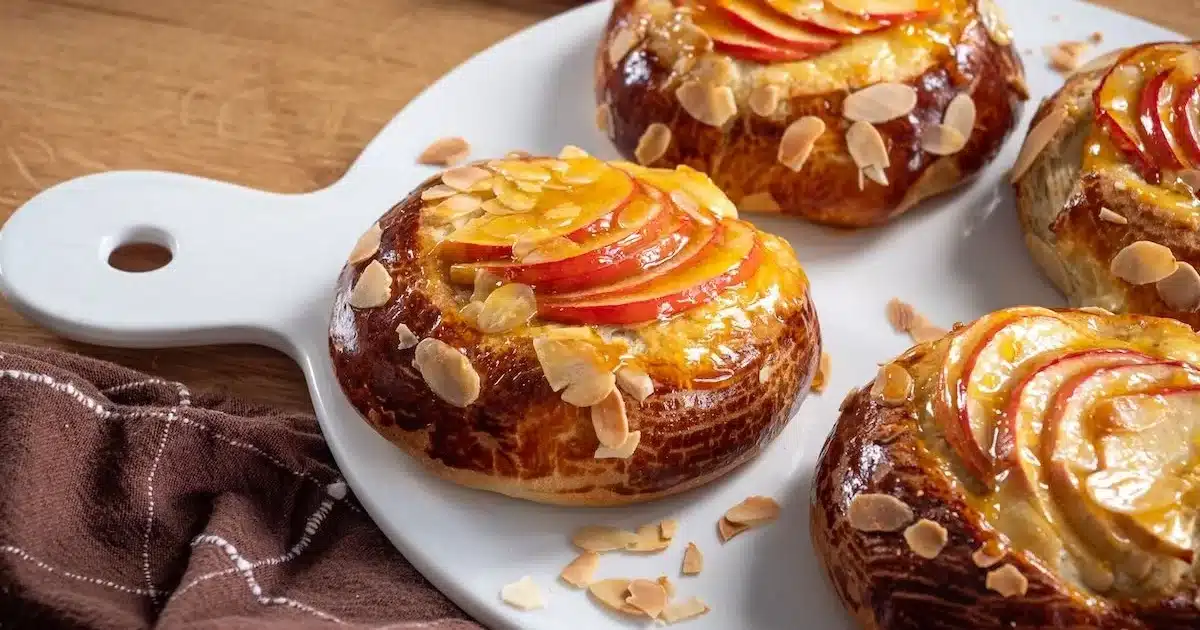
Soft apple and almond brioche combines the richness of a hand-worked dough with the warmth of almond cream and tender fruit. Created by Guillaume Marinette, this recipe for 6 people takes a few hours of patience but delivers results that rival any bakery window. The kind of bake worth clearing your afternoon for.
There's something almost meditative about brioche-making. The dough demands time, attention, and a willingness to let fermentation do its quiet work. But the payoff, a golden, pillowy roll filled with almond cream, soft apple slices, and a shiny apricot glaze, makes every minute of resting and kneading feel worthwhile.
This recipe from Guillaume Marinette breaks the process into two clear parts: the brioche dough itself, and the almond cream filling that transforms these rolls from simple bread into something genuinely special. If you've ever tackled a soft, buttery bake from scratch, you already know the satisfaction of pulling something homemade out of the oven.
The brioche dough requires time, not skill
The foundation of this recipe is a classic enriched dough built from 500 g of T45 flour, 60 g of sugar, 5 g of salt, 3 eggs, and 100 ml of warm milk. The leavening comes from 20 g of fresh baker's yeast (or 7 g of the dried variety), dissolved in the warm milk and left to activate for 10 minutes before being incorporated.
Kneading in two stages for the right texture
Once the yeast mixture is ready, combine it with the flour, sugar, salt, and eggs, then knead for roughly 10 minutes until the dough becomes smooth and elastic. Only then does the butter enter the picture: 120 g of soft unsalted butter, added gradually in small cubes while kneading continues for another 10 to 15 minutes. This two-stage approach is what gives brioche its characteristic tender, stringy crumb. Rushing the butter in too early prevents the gluten network from forming properly.
The first rise sets everything in motion
Shape the dough into a ball, cover it with a clean cloth, and leave it at room temperature for 2 full hours. The dough must double in volume during this time. Don't be tempted to cut this short. That slow fermentation is what builds flavor and the soft, open texture that defines a good brioche.
If your kitchen is cold, place the covered dough near a warm oven or inside it with just the light on. A stable, slightly warm environment helps the yeast work consistently.
The almond cream filling is where the flavor lives
While the dough rests, prepare the crème d'amande. Combine 50 g of softened butter, 50 g of sugar, 50 g of almond powder, and 1 egg until you get a smooth, cohesive paste. Adding 5 g of flour is optional but helps stabilize the cream during baking, preventing it from becoming too liquid. This almond filling is what separates these brioche rolls from a plain dinner roll. It adds richness, a faint nuttiness, and a slightly caramelized interior once baked.
Almond-based pastry fillings share the same DNA as the frangipane found in galettes des rois or the topping used in certain tarts. If you enjoy bold, nutty flavors in baking, you might also appreciate the combination found in this almond and argan spread that makes a compelling alternative to commercial spreads.
Shaping, filling, and the second rise
Once the dough has doubled, punch it down firmly to release the gas. Divide it into 6 equal portions and roll each one into a ball. Press a well into the center of each ball deep enough to hold a generous spoonful of almond cream. Fill each hollow with the cream, then place the shaped rolls into a buttered mold, leaving a little space between each one for the second rise.
Cover the mold and let the rolls proof for 1 more hour. This second rise is what gives them their final volume and that soft, pillowy bite after baking.
of total proofing time for the perfect brioche texture
Baking and finishing with apples, almonds, and glaze
With the second rise complete, preheat the oven to 180°C. Brush the surface of each roll with 1 egg yolk diluted in a little water. This wash is what creates that deep amber, glossy crust that makes freshly baked brioche so visually appealing.
Apples and almonds go on last
Peel and slice 3 apples into thin strips, then arrange the pieces over the top of each roll. Scatter 1 tablespoon of sliced almonds across the surface. These two toppings do very different things: the apple softens into a jammy, fragrant layer during baking while the almonds toast and add a satisfying crunch that contrasts with the soft dough underneath.
Slide the mold into the oven and bake for 25 to 30 minutes, until the tops are deep golden and the kitchen smells like a proper French boulangerie.
The apricot glaze seals the deal
The moment the brioche rolls come out of the oven, brush them immediately with 1 tablespoon of apricot jam diluted in a small amount of water. This step is quick but non-negotiable. The glaze locks in moisture, adds a subtle fruity sweetness, and gives the surface that professional, lacquered finish you see in bakery displays. Transfer the rolls to a wire rack to cool before serving.
Apply the apricot glaze while the brioche is still hot. The heat helps the jam absorb into the surface evenly, creating a clean, shiny finish rather than a sticky coating.
Getting the butter perfectly soft before making both the dough and the filling matters more than most bakers realize. If you're not sure how to get there quickly, this fast butter-softening method using a glass is genuinely useful. And if you ever find yourself short on butter mid-recipe, knowing what can replace 100g of butter in a pinch saves a trip to the store.
These soft apple and almond brioche rolls are best eaten the same day, slightly warm, when the contrast between the pillowy dough, the fragrant almond cream, and the caramelized apple is at its most vivid. They keep reasonably well wrapped at room temperature for a day, but honestly, six rolls between the right crowd rarely make it to the next morning.