
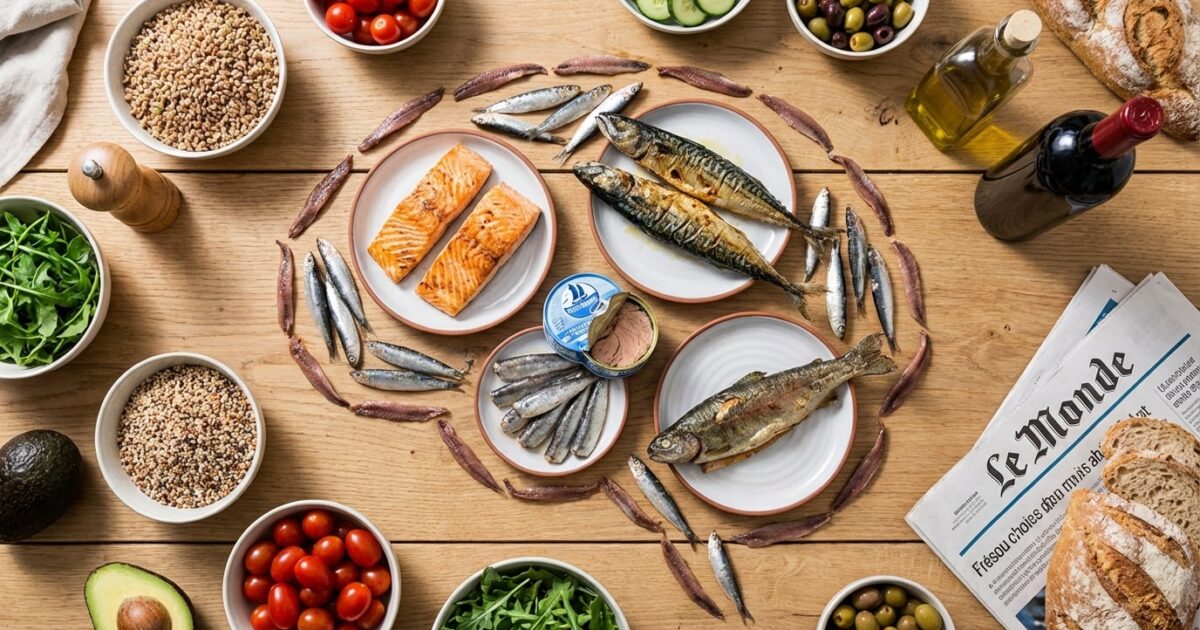
Omega-3 fatty acids EPA and DHA are among the most studied nutrients for brain health, and fish remains their richest dietary source. Eating fish twice a week, including at least one portion of oily fish, is the threshold recommended by health authorities to meaningfully support cognitive function across all ages.
Not all fish are equal when it comes to omega-3 content, mercury risk, or overall nutritional value. Choosing the right species, at the right frequency, makes a real difference — whether you're protecting an aging brain, supporting a child's development, or simply eating smarter.
Omega-3s and the brain: what the science actually says
DHA (docosahexaenoic acid) is the primary fat found in brain tissue. Together with EPA (eicosapentaenoic acid), it forms a structural component of neuron membranes, keeping them fluid and functional. Without adequate levels of these marine omega-3 fatty acids, communication between brain cells becomes less efficient.
The consequences of regular fish consumption are well-documented. Studies on older adults consistently show a slower rate of memory decline in those who eat fish regularly. Both the Mediterranean diet and the MIND diet — two of the most researched dietary patterns for brain health — place oily fish at their core, and both are associated with a meaningfully reduced risk of dementia.
From fetal development to old age
The brain's need for DHA and EPA doesn't begin at adulthood. It starts in the womb. Fetal development depends heavily on maternal omega-3 intake, and that need continues through childhood, adolescence, and into old age. Health authorities recommend 250 mg/day of EPA and 250 mg/day of DHA for adults — a target that two weekly portions of oily fish can realistically meet.
Omega-3s also contribute to limiting neuroinflammation, a process increasingly linked to cognitive aging. And fish brings another brain-relevant nutrient to the table: vitamin D, whose deficiency has been associated with cognitive decline in seniors.
Health authorities advise eating fish 2 times per week, including at least 1 portion of oily fish. This applies to most adults and is the baseline for meaningful omega-3 benefit.
The 7 best fish rich in omega-3s, ranked by what they offer
| Fish | Key nutrients | Omega-3 level |
|---|---|---|
| Sardines | Omega-3, B12, D, calcium, selenium, vitamin E | > 1g / 100g |
| Atlantic mackerel | Omega-3, B12, D, calcium, selenium, vitamin E | > 1g / 100g |
| Herring | Omega-3 | High |
| Anchovies | Omega-3 | High |
| Salmon | EPA, DHA, vitamin D, selenium | High |
| Trout | EPA, DHA, vitamin D | High |
| Canned tuna | Omega-3, vitamin B12 | Moderate |
Sardines and Atlantic mackerel lead the list with more than 1 gram of omega-3 per 100 grams, making them the most efficient options per serving. They also deliver vitamin B12, vitamin D, calcium, selenium, and vitamin E — a genuinely dense nutritional package. Herring and anchovies sit in the same category: small, fatty, and low on the food chain.
Salmon is the most widely consumed oily fish in Western diets, and for good reason. It provides substantial amounts of both EPA and DHA, alongside vitamin D and selenium. Trout offers a very similar profile, often at a lower price point, and deserves more attention than it typically gets.
Canned tuna is the practical everyday option — affordable, shelf-stable, and a solid source of omega-3s and vitamin B12. But it comes with a caveat.
The mercury question with tuna
Tuna accumulates mercury at higher levels than smaller fish, simply because it sits higher on the food chain. For most healthy adults, moderate consumption poses no significant concern. But pregnant women and children should limit their tuna intake and prioritize smaller species instead. When choosing canned tuna, "light" tuna varieties consistently show lower mercury concentrations than albacore or white tuna, making them the smarter pick for regular use.
Small oily fish — sardines, mackerel, herring, anchovies — don't carry the same risk. Their position low in the marine food chain means mercury accumulation stays minimal, which is precisely why health authorities encourage prioritizing them.
How to eat more omega-3-rich fish without overcomplicating it
The practical barrier to eating fish twice a week is rarely knowledge — it's habit and preparation. The good news is that the most omega-3-dense fish are also among the easiest to cook. Sardines and mackerel take well to the oven, en papillote, or the grill, all methods that preserve their nutritional value without masking their flavor.
Varying species is both a nutritional strategy and a culinary one. Alternating between salmon, trout, tuna, and the smaller oily fish ensures a broader range of micronutrients and reduces repeated exposure to any single contaminant. Pairing fish with vegetables and whole grains — as both the Mediterranean and MIND dietary patterns recommend — rounds out the meal into something genuinely protective for long-term brain health.
If you enjoy exploring diverse food cultures, it's worth noting that traditional diets rich in fish and legumes have long understood this balance intuitively. A dish like Moroccan harira, for instance, reflects a broader Mediterranean approach to eating that prioritizes nutrient density and variety over simplicity.
Prioritize small oily fish (sardines, mackerel, herring, anchovies) for the highest omega-3 density and lowest mercury risk. Alternate with salmon, trout, and light canned tuna to hit the 2-portions-per-week target without monotony.
The simplest upgrade to a fish-based meal is also one of the most overlooked: cooking technique. Just as a chef's approach to a fried egg changes the result entirely, the way fish is prepared determines how much of its nutritional value actually reaches the plate. High heat and heavy sauces are the two main ways to undermine an otherwise excellent choice. A light grill or a papillote with herbs preserves what makes these fish worth eating in the first place.