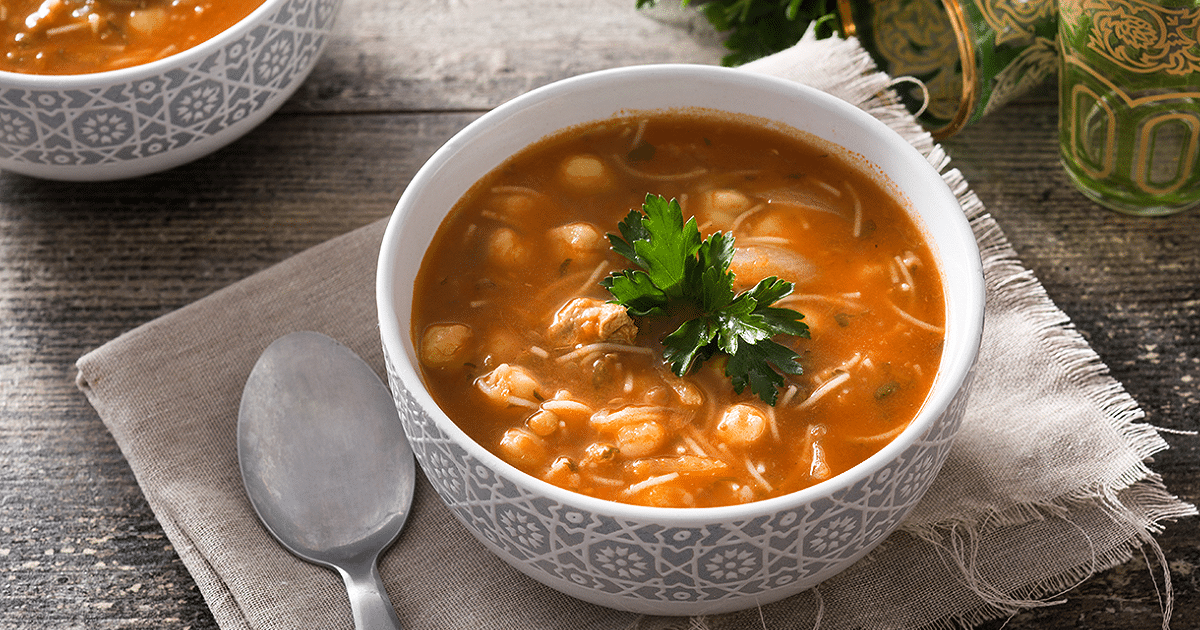
Moroccan harira is far more than a simple soup. Generous, deeply spiced, and built on a foundation of tomatoes, chickpeas, and fresh herbs, this iconic dish has warmed tables across Morocco for generations, especially during Ramadan. Here is a family recipe, shared by a Moroccan cook, with every technique explained in detail.
Few dishes carry as much cultural weight as harira. Served at the ftour to break the fast during Ramadan, it brings together legumes, aromatics, and a slow, patient simmer into something that feels genuinely restorative. And yet, despite its reputation, making an authentic harira at home is entirely within reach, provided you understand a handful of key steps.
Before diving into the process, one distinction is worth making: harira is not chorba. While both are North African soups, harira has its own identity, defined by its tomato base, its characteristic thickness, and its specific blend of spices. If you've ever wondered about what makes true Moroccan harira different, the answer often comes down to those details.
The ingredients that define authentic harira
The backbone of a traditional harira relies on a short but precise list of ingredients. Tomatoes form the liquid base, ideally as a homemade purée or coulis. When fresh tomatoes are out of season or too watery, adding a spoonful of tomato concentrate during the initial sauté intensifies the flavor without flooding the pot with extra liquid. Celery, both the stalks and the leaves, adds a subtle bitterness that balances the richness of the legumes.
Chickpeas are non-negotiable. Dried chickpeas must soak in cold water for at least 12 hours before cooking. Skip this step and they risk staying firm no matter how long they simmer. In an emergency, jarred chickpeas work as a substitute, but they should only be added at the very end of cooking to avoid turning mushy.
Herbs and spices: the aromatic core
Fresh coriander, parsley, and celery leaves go in together, and the technique matters. Rather than adding them directly to the broth, a Moroccan cook sautés them first in olive oil before introducing any other ingredient. This step unlocks their aromatics and builds a deeper flavor foundation for the entire soup.
The spice blend is restrained but deliberate. For a large pot, the recommended doses are ½ teaspoon of turmeric, ½ teaspoon of ginger, a pinch of pepper, and a touch of cinnamon. Starting with these quantities and tasting as you go is the right approach, because an overloaded spice profile can easily overpower everything else.
Starch and body: vermicelli and its alternatives
Vermicelli is the traditional choice for adding body and texture. But the recipe adapts well: langues d'oiseau (also called ouberba), rice, or even quinoa all work as substitutes. The key is adjusting the cooking time depending on which starch you choose, since each one behaves differently in a hot broth.
How to thicken harira the right way
One of harira's defining qualities is its thick, almost velvety consistency. Traditionally, this comes from flour whisked into the soup during the final stages of cooking. But for those avoiding gluten, two clean alternatives exist.
The first is cornstarch or potato starch diluted in a small amount of cold water, then stirred into the simmering soup at the end. The second requires no added thickener at all: simply ladle out a portion of the cooked soup, blend it smooth, and stir it back in. The result is a naturally creamy texture without any flour or starch. For a vegan harira, natural sourdough starter can also serve as a thickening agent.
Harira thickens significantly as it cools. When reheating, always add a splash of water and stir with a wooden spoon over low heat. Without this step, the soup will stick to the bottom of the pot.
Vegetarian and vegan versions of harira
Harira without meat is not a compromise. It is, in many households, the preferred version. A vegetarian harira simply omits the meat and any animal-based broth. A vegan harira goes further: no butter, no animal stock, olive oil only, and a noticeably larger quantity of legumes and vegetables to compensate for the missing protein and richness.
Seasonal vegetables cut into small dice, such as carrots, turnip, or zucchini, integrate naturally into the base without disrupting the soup's character. The legume ratio, particularly the chickpeas, can be doubled to give the vegan version more substance.
minimum soaking time for dried chickpeas before cooking
Serving and storing harira
The traditional accompaniments for harira are as considered as the soup itself. Fresh dates, hard-boiled eggs, homemade bread, and batbout (a Moroccan flatbread) are the classic pairing at the Ramadan ftour table. For a more casual setting, bricks, small savory muffins, or a simple crudité salad work equally well alongside the soup.
Harira stores without issue in a sealed container in the refrigerator for 2 to 3 days. The flavor often improves by the second day, once the spices have had time to meld fully into the broth.
Always taste and adjust seasoning at the very end of cooking, once the soup has reached its final consistency. Spices concentrate as the broth reduces, so what seemed balanced mid-cook may need a small correction before serving.
Harira is one of those recipes where the process teaches you as much as the result. Each pot is slightly different, shaped by the cook's instincts, the quality of the tomatoes, and the patience invested in the simmer. Master the fundamentals, and the rest follows naturally. Much like learning a reliable kitchen technique for something as simple as a fried egg, the real skill in harira lies not in the list of ingredients but in understanding why each step works.