The strawberry daiquiri is one of the simplest cocktails to get right — and one of the easiest to ruin with shortcuts. Made with fresh strawberries, good white rum, fresh lime juice, and a touch of simple syrup, it delivers a balance of sweet and tart that no pre-made mix can replicate. Master the ratios, respect the technique, and this refreshing summer drink becomes a genuine crowd-pleaser.
Few cocktails have the universal appeal of the strawberry daiquiri. It sits at that rare intersection of accessibility and elegance: easy enough for a backyard barbecue, refined enough for a dinner party. And yet, most versions served at bars fall flat, leaning too sweet, too icy, or too artificial. The difference between a forgettable frozen slush and a genuinely good strawberry daiquiri cocktail comes down to ingredients and method. Both are simpler than most people expect.
The essential ingredients for a perfect strawberry daiquiri
The quality of a daiquiri is entirely determined by what goes into the shaker. There are only four core components, which means there is nowhere to hide a mediocre ingredient.
Fresh strawberries: the non-negotiable foundation
Use fresh, ripe strawberries whenever possible. Frozen strawberries work in a blended version, but they introduce extra water as they thaw, which dilutes the final drink. Fresh berries, hulled and sliced, give a brighter, more concentrated flavor. Look for strawberries that are deep red all the way through — pale or white at the center means underdeveloped sweetness and flavor.
For a single serving, 4 to 6 medium strawberries is the right quantity. Muddle them thoroughly in the shaker before adding the other ingredients, or blend them into a smooth purée if you prefer a silkier texture.
White rum: choosing the right base spirit
The daiquiri classique was always built on white rum, and that tradition holds for good reason. A clean, lightly aged white rum — Bacardí Superior, Havana Club 3 Años, or Diplomatico Planas — provides the necessary backbone without overpowering the fruit. Avoid dark or spiced rum here; they compete with the strawberry rather than supporting it.
The standard measure is 60 ml (2 oz) of rum per serving. This is not a cocktail that benefits from being watered down.
Lime juice and simple syrup: the balance
Freshly squeezed lime juice is mandatory. Bottled lime juice tastes flat and oxidized — it will undercut everything else in the glass. One large lime typically yields around 30 ml (1 oz) of juice, which is the target quantity.
Simple syrup (equal parts sugar and water, dissolved together) provides the sweetness. Start with 15 ml (½ oz) and adjust based on the natural sweetness of your strawberries. The goal is balance: the lime should still cut through, and the fruit should read as strawberry, not candy.
To make simple syrup at home, combine 100 g of white sugar with 100 ml of water in a small saucepan. Heat over medium, stirring until fully dissolved. Cool before using. It keeps refrigerated for up to two weeks.
Step-by-step preparation of the strawberry daiquiri cocktail
There are two legitimate methods: shaken (on the rocks or straight up) and blended (frozen). Each produces a different drink. Neither is superior — they serve different occasions.
The shaken method for a clean, classic result
This is the approach that stays truest to the daiquiri classique tradition. It produces a chilled, slightly frothy cocktail with clean fruit flavor and a proper alcoholic backbone.
- Hull and slice 4 to 6 fresh strawberries and place them in a cocktail shaker.
- Add 15 ml of simple syrup and muddle the strawberries firmly until fully broken down.
- Add 60 ml of white rum and 30 ml of freshly squeezed lime juice.
- Fill the shaker with ice — generously, not a token handful.
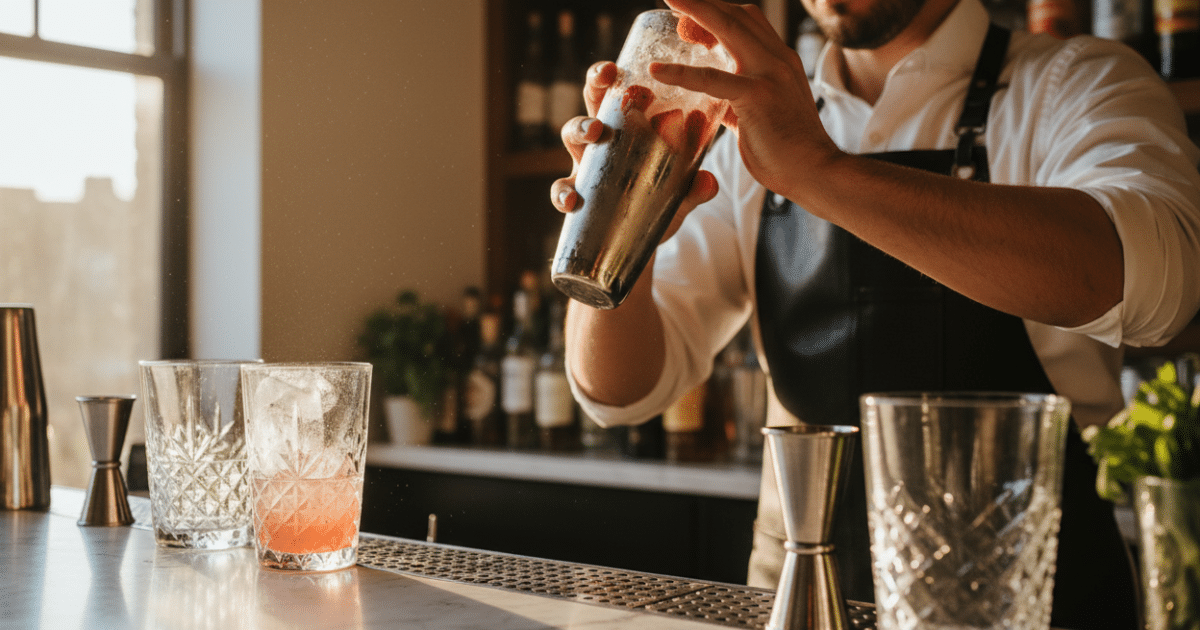
- Shake hard for 15 to 20 seconds. The shaker should become uncomfortably cold to the touch.
- Double-strain through a fine mesh strainer into a chilled coupe or martini glass to remove strawberry seeds and ice chips.
The double-strain step is what separates a polished result from an amateur one. It takes an extra ten seconds and makes a visible difference in texture.
The blended method for a frozen summer drink
The frozen strawberry daiquiri is a legitimate boisson estivale in its own right, not a lesser version of the original. Use the same ingredient quantities, but replace fresh strawberries with frozen ones (or use fresh berries alongside a full cup of crushed ice).
Combine everything in a blender — rum, lime juice, simple syrup, strawberries, and 1 to 1.5 cups of crushed ice. Blend on high for 30 to 45 seconds until completely smooth. The texture should be thick enough to hold a shape but fluid enough to pour. If it's too thin, add more ice. If it's too thick, add a splash of lime juice or water, never more rum.
Over-blending breaks down the ice too finely and produces a watery result. Blend in short bursts rather than running the blender continuously.
Variations worth exploring
The classic recipe is a strong foundation, and it holds up to creative adjustments without losing its identity as a cocktail fruité.
Strawberry-basil daiquiri
Add 4 to 5 fresh basil leaves to the shaker alongside the strawberries before muddling. Basil introduces a herbal, slightly peppery note that sharpens the fruit and adds unexpected depth. This variation works particularly well in the shaken format, where the herb's aromatics remain distinct rather than blending into the background.
Strawberry-coconut daiquiri
Replace 20 ml of the white rum with coconut rum, or add 15 ml of coconut cream to the blended version. The result tilts toward a tropical profile without crossing into piña colada territory. Keep the lime juice at full quantity — the coconut's richness needs that acidity to stay balanced.
Low-sugar daiquiri
For those watching sugar intake, swap simple syrup for agave nectar at a 1:1 ratio but reduce the quantity to 10 ml. Agave is sweeter than cane sugar syrup, so less is needed. The flavor profile shifts slightly — agave has a mild floral quality that complements strawberry well.
- Cleaner, more defined flavors
- Lower alcohol dilution
- Faster to prepare
- Closer to the classic recipe tradition
- Requires a blender
- More dilution from ice
- Texture can be inconsistent
- Less suitable for formal settings
Presentation tips that make a difference
A well-made cocktail aux fraises deserves a glass that does it justice. Presentation is not superficial — it shapes how the drink is perceived before the first sip.
Glassware and garnish
The shaken version belongs in a chilled coupe glass. Place the glass in the freezer for 10 minutes before serving, or fill it with ice water while you prepare the drink, then discard before pouring. A frosted glass keeps the cocktail cold longer and creates an immediate visual impression.
For the frozen version, a wide-mouthed hurricane glass or a stemmed goblet works best — something that shows off the color and allows easy sipping.
Garnish simply. A fresh strawberry on the rim, a thin lime wheel, or a small sprig of mint are all you need. Avoid elaborate garnishes that distract from the drink itself. If you want to add a decorative touch to the rim, run a lime wedge around the edge and dip it in fine sugar — but keep it light. A heavily sugared rim overwhelms the balance you worked to achieve.
Batching for a group
When preparing this recette de cocktail for multiple guests, scale the recipe proportionally and prepare a large batch in a pitcher. For 8 servings, combine 480 ml of white rum, 240 ml of lime juice, 120 ml of simple syrup, and the purée of roughly 40 strawberries. Stir well, refrigerate for up to two hours, and shake individual portions over ice just before serving. This preserves freshness without forcing you to make each drink from scratch during a party.
Food pairings that complement a strawberry daiquiri
The boisson rafraîchissante quality of a strawberry daiquiri makes it a natural aperitif, but it also pairs well with specific foods when served alongside a meal.
Savory pairings
The cocktail's acidity and fruit sweetness cut through rich, fatty foods with surprising effectiveness. Grilled shrimp with a citrus marinade is a natural match — the lime in both the food and the drink creates a coherent flavor thread. Light ceviche, fish tacos, and fresh goat cheese bruschetta all work along the same principle: bright, acidic, not too heavy.
Avoid pairing with intensely savory or umami-rich dishes like aged cheeses, red meat, or anything heavily spiced. The strawberry daiquiri's delicacy gets lost against those flavors.
Sweet pairings
A strawberry daiquiri served as a dessert cocktail pairs well with dark chocolate — the bitterness of the chocolate creates a contrast that makes both elements taste more complex. Shortbread, vanilla panna cotta, or a simple fruit tart also work well, echoing the berry notes without competing with them.
For those curious about how alcohol content shapes food pairing decisions, understanding the caloric and flavor profile of different drinks helps — the principles that apply to a pint of Guinness differ significantly from those of a spirit-forward cocktail like the daiquiri, but the underlying logic of balance remains the same.
The strawberry daiquiri rewards attention to detail at every stage — from selecting ripe fruit to choosing the right glass. Get those fundamentals right, and this classic cocktail recipe needs nothing else to impress.