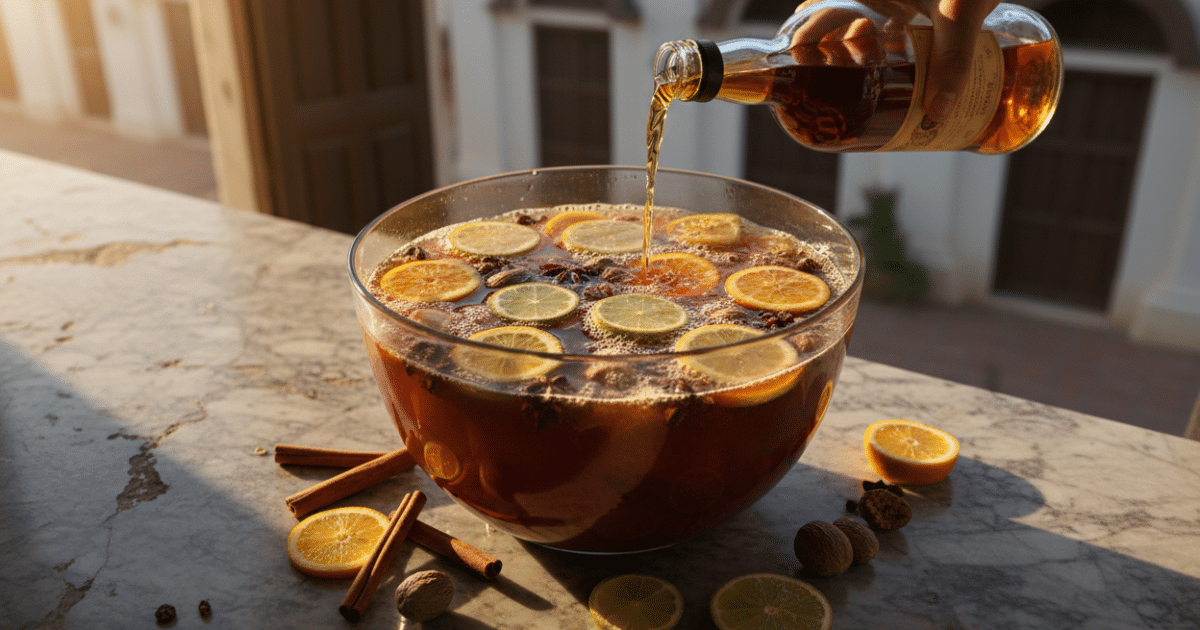
Rum punch is one of the oldest mixed drinks in the world, yet it remains one of the most misunderstood. Far from being a simple mix of rum and fruit juice, it carries centuries of Caribbean history, colonial trade routes, and island identity in every glass. Master the fundamentals, understand the regional logic, and you can make a rum punch that actually tastes like something — not just sweet alcohol.
Rum punch has a way of showing up at every celebration worth remembering. Beach weddings in Barbados, street festivals in Jamaica, family gatherings across Trinidad — the drink is everywhere, and for good reason. But most versions served outside the Caribbean fall flat, either too sweet, too weak, or stripped of the layered complexity that makes the original worth drinking. Learning how to make rum punch properly means going back to its roots, understanding why each ingredient exists, and then knowing which rules you can bend.
The history of rum punch runs deeper than most people realize
The story of rum punch doesn't start at a beach bar. It starts in the 17th century, when British sailors and merchants began mixing rum with whatever was available on long Atlantic crossings. Rum itself was a byproduct of the Caribbean sugar trade — distilled from molasses, cheap, and abundant. The word "punch" almost certainly derives from the Sanskrit word panch, meaning five, referring to the five original components: alcohol, sugar, lemon or lime, water, and spice.
From colonial trade ships to island tradition
By the 1650s, punch had become the dominant social drink across the British colonies. It was consumed in punch houses, the forerunners of modern bars, and served in large shared bowls rather than individual glasses. The Caribbean quickly adopted and transformed the format, replacing European spirits with local rum and swapping imported citrus for the limes and oranges growing in abundance on the islands.
What makes this history culturally significant is that rum punch didn't stay a colonial import. It became genuinely Caribbean. Each island developed its own version, its own ratios, its own preferred rum. Barbados, widely credited as the birthplace of rum, has been making its own version for nearly four centuries. The drink absorbed local identity so thoroughly that today, a Barbadian rum punch and a Martiniquais punch au rhum taste nothing alike — and both sides will tell you their version is the authentic one.
The rule that changed everything
Somewhere in the Eastern Caribbean, someone distilled the recipe into a mnemonic that became the backbone of rum punch tradition: "one of sour, two of sweet, three of strong, four of weak." This four-line formula — one part lime juice, two parts sugar syrup, three parts rum, four parts water or juice — is still the starting point for most Caribbean bartenders today. It's elegant, scalable, and flexible enough to accommodate every island's preferences. And it works.
The essential ingredients for a proper rum punch
Getting the ingredients right is where most homemade versions go wrong. The temptation is to grab whatever rum is on the shelf and pour it over a bottle of store-bought tropical juice. The result is drinkable but forgettable.
Choosing the right rum
The rum is the foundation. For a classic Caribbean-style rum punch, a dark or aged rum is the standard choice — it brings depth, vanilla notes, and a warmth that white rum simply can't replicate. Barbadian rums like Mount Gay or Cockspur are traditional choices. Jamaican rums such as Appleton Estate add a funkier, more assertive profile. For a lighter, more elegant punch, a rhum agricole from Martinique or Guadeloupe — made from fresh sugarcane juice rather than molasses — delivers a grassy, complex character that changes the drink entirely.
Using a blend of two rums, one dark and one white, is a technique worth considering. It adds complexity without overwhelming the citrus components.
The citrus and sweetener balance
Fresh lime juice is non-negotiable. Bottled lime juice introduces a metallic, artificial note that no amount of sugar can hide. The acidity of fresh lime is what makes the punch come alive — it cuts through the sweetness and amplifies the rum's aromatic compounds.
For the sweetener, simple syrup (equal parts sugar and water, dissolved) is the standard. Some Caribbean recipes use raw cane sugar syrup, which adds a slight molasses undertone that pairs beautifully with dark rum. Grenadine appears in many versions and contributes both sweetness and the characteristic pink-red color of a classic tropical punch.
Always squeeze your limes at the last moment before mixing. Lime juice oxidizes quickly and loses its brightness within an hour of being squeezed. For large batches, squeeze no more than 30 minutes in advance and keep refrigerated.
Angostura bitters — a few dashes, not a splash — is the finishing touch that separates a serious rum punch from a casual one. Made in Trinidad since 1824, Angostura adds complexity, a subtle herbal bitterness, and the aromatic depth that makes the drink feel complete. Freshly grated nutmeg on top is the Barbadian signature and should not be skipped.
The classic rum punch recipe, step by step
This recipe follows the traditional Caribbean ratio and serves four. Scale it up freely — rum punch is made for sharing.
Ingredients:
- 90 ml fresh lime juice (one part)
- 180 ml simple syrup or cane sugar syrup (two parts)
- 270 ml dark rum, preferably Barbadian or Jamaican (three parts)
- 360 ml cold water or unsweetened pineapple juice (four parts)
- 3-4 dashes Angostura bitters
- Freshly grated nutmeg to finish
- Ice
Method:
- Combine the lime juice and simple syrup in a large pitcher or punch bowl. Stir to integrate fully before adding the alcohol — this ensures the sugar dissolves evenly.
- Add the rum and stir again.
- Pour in the water or pineapple juice and add the Angostura bitters.
- Taste and adjust. More lime if it's too sweet, a touch more syrup if the lime dominates.
- Fill glasses with ice, pour the punch over, and finish with freshly grated nutmeg on each glass.
The result should be balanced — you should taste the rum clearly, feel the citrus lift, and finish with a warm, slightly spiced note. If the rum disappears behind sweetness, add more lime. If the lime dominates, add a small amount of syrup and stir. Getting this balance right is the skill.
The classic Caribbean ratio — one sour, two sweet, three strong, four weak — is your anchor. Every regional variation starts from this formula and adjusts one or two elements. Learn it before you start experimenting.
Regional variations of rum punch that are worth knowing
The Caribbean is not a monolith, and neither is its rum punch. Each island has developed its own interpretation, shaped by local rum production, available fruits, and cultural history. These aren't just minor tweaks — some versions taste fundamentally different.
Barbados: the original and the benchmark
The Bajan rum punch sticks closest to the traditional formula. Mount Gay rum is the preferred base, and the drink is typically served with a generous dusting of nutmeg and sometimes a slice of orange. It's the version most people encounter first, and for good reason — it's balanced, approachable, and deeply satisfying. Barbados has been producing rum since the 1640s, and that experience shows.
Martinique and Guadeloupe: punch au rhum
The French Caribbean islands do things differently. Their version, called punch au rhum or simply "ti' punch," is far more austere: rhum agricole, a small amount of cane syrup, and a squeeze of lime. No water, no juice, no ice in the traditional presentation. It's served at room temperature, and the drinker adjusts the syrup to their taste. The agricole rum's grassy, vegetal character means this drink tastes nothing like the Barbadian version — it's sharper, more intense, and uncompromising.
Jamaica: the fruity, high-proof variation
Jamaican rum punch leans into tropical fruit flavors more aggressively. Pineapple juice, passion fruit, and orange juice are common additions, and the rum — typically a high-ester Jamaican style like Wray & Nephew or Appleton — brings a funky, almost overripe fruit character that dominates the blend. The result is richer and more aromatic than the Bajan version, with a sweetness that's balanced by the rum's intensity rather than by additional citrus.
Trinidad: the bitters-forward approach
Trinidad, home of Angostura, unsurprisingly produces a rum punch where bitters play a more prominent role. Local recipes often double or triple the bitters compared to other islands, creating a more herbal, complex punch. Trinidadian rum punch also frequently incorporates local fruits like soursop or tamarind, adding an exotic sourness that sets it apart from fruit-forward Jamaican versions.
- Adds depth, vanilla, and warmth
- Traditional for most Caribbean versions
- Pairs well with spiced and citrus notes
- Lacks complexity on its own
- Can make the punch feel thin
- Best used as a secondary rum in a blend
Personalizing your rum punch and pairing it with food
Once the classic recipe is understood, adjusting it to personal taste becomes straightforward. The key is to change one variable at a time rather than overhauling the entire formula.
Adjusting flavor and presentation
For a spiced rum punch, replace a third of the base rum with a quality spiced rum and add a cinnamon stick to the pitcher while it chills. For a more tropical character, swap the water component entirely for fresh mango juice or passion fruit pulp — but reduce the syrup proportionally, since these juices add their own sweetness. A frozen rum punch works well for outdoor gatherings: blend the punch with crushed ice until slushy, adjusting the lime upward slightly since cold temperatures suppress acidity perception.
Garnishes matter more than most people think. A wheel of lime or orange on the rim is classic. Fresh mint adds an aromatic dimension. Edible flowers — hibiscus is particularly appropriate and visually striking — signal a certain level of care without requiring effort. Avoid plastic cocktail umbrellas if you want the drink to be taken seriously.
Food pairings that make sense
Rum punch is a festive drink, and it pairs best with food that shares its boldness. Jerk chicken is the obvious match — the punch's sweetness and citrus cut through the heat and smoke of the marinade. Grilled fish with a mango salsa works equally well. For lighter occasions, rum punch alongside fried plantains or accras (Caribbean salt cod fritters) creates a genuinely Caribbean spread that holds together.
The drink's sweetness makes it less suited to delicate dishes. A fine fish carpaccio or a subtle cheese plate will be overwhelmed. But for anything grilled, spiced, or fried, rum punch is a natural partner. If you're exploring other festive drink options for gatherings with different dietary preferences, it's worth knowing that some lighter options have a surprisingly manageable calorie count — useful context when planning a full drinks menu.
For large gatherings, make the punch base the night before and refrigerate it without ice. Add ice only when serving, and keep a small pitcher of extra lime juice on hand — the flavors shift overnight and a fresh squeeze often brings the batch back to life. That's the difference between a rum punch that impresses and one that just gets people through the evening.