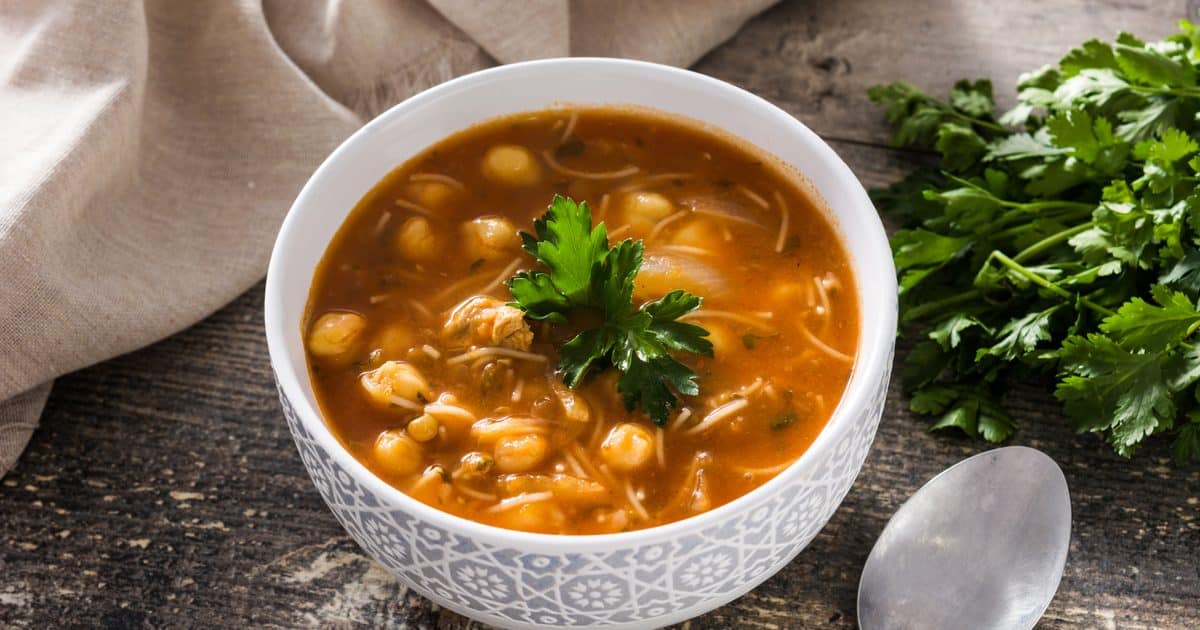
Moroccan harira is far more than a simple soup. Behind its rich, velvety texture hides a centuries-old secret: sourdough starter, known in Arabic as khmira beldia, a fermented leavening agent that thickens the broth and replaces the squeeze of lemon most people expect on the side. Very few cooks outside the Maghreb know this trick, and even fewer use it at home.
Food writer Julia Voiland recently documented the technique through the work of culinary content creator Loubna Jaibi, who shares her recipes under the handle @lesgourmandisesdeloubna. Her version of harira brings this traditional method back to the forefront, and once you understand it, you'll never look at the soup the same way again.
Harira (pronounced h'rira) is a hearty, meat-and-vegetable soup deeply embedded in Moroccan and Algerian culinary culture. It's eaten year-round, but its most iconic moment comes during Ramadan, when it breaks the fast each evening. The recipe shifts from one region to the next, and from one family kitchen to another, but the structural backbone remains consistent: legumes, fresh herbs, tomato, and a thickening agent called the tadwira.
The tadwira: what actually separates harira from chorba
Most people lump North African soups together without knowing the key distinction. Chorba and harira are not the same dish. What separates them is precisely this element, the tadwira, a binder made from flour and water that gives harira its signature thick, silky consistency.
In Loubna Jaibi's recipe, the tadwira is replaced by a sourdough-based liant, and this is where the real magic happens. The sourdough starter doesn't just thicken the broth; it introduces a gentle, natural acidity that traditionally requires a squeeze of lemon at the table. With the sourdough version, that acidity is already built in, absorbed into the soup during cooking.
The sourdough liant: a 24-hour preparation
The liant is prepared the day before, giving it a full 24 hours to ferment at room temperature. The process is straightforward but requires patience:
- Mix 30 g of liquid sourdough starter with 100 g of water until fully dissolved
- Gradually whisk in 100 g of flour to avoid lumps
- Cover with a clean cloth and leave to ferment overnight
By the next day, the mixture has developed its characteristic tang. When added to the hot soup in a slow, steady stream while stirring, it transforms the texture from thin broth to something closer to a warm, thick velvet. The fermentation time is not optional; it's what creates the flavor depth that distinguishes a real harira from a shortcut version.
If you don’t have sourdough starter on hand, the traditional tadwira (plain flour mixed with water) works as a substitute. But the sourdough version adds an acidic complexity that the plain version simply can’t replicate.
The full ingredient list, built for depth of flavor
The base of Loubna Jaibi's harira uses 200 g of lamb or beef, though a meatless version is entirely possible. The aromatics are generous: 1 onion, a full bunch each of fresh coriander and fresh parsley, and 2 celery stalks. The tomato element comes from 300 ml of tomato coulis (or 4 large peeled and blended fresh tomatoes as a seasonal alternative).
Legumes anchor the soup's substance: a handful of chickpeas soaked overnight, and 2 tablespoons of green lentils soaked in water. A small handful of angel hair pasta (cheveux d'ange) goes in at the very end, just 5 minutes before serving, so it cooks through without going mushy.
The role of smen in traditional harira
Among all the ingredients, smen deserves special attention. This fermented North African butter is added in a modest quantity, just 1 teaspoon, but its impact is outsized. Its flavor profile is often compared to Roquefort: funky, aged, deeply savory. Combined with 1 teaspoon of turmeric and the sourdough liant, it creates a layered umami backbone that no spice blend can replicate.
If smen is unavailable, ghee works as a substitute, though it lacks the fermented character. The substitution is practical but changes the flavor profile noticeably. Much like how fermentation transforms grain into something entirely different (a principle familiar to anyone who has explored fermented drinks and their flavor complexity), smen brings a dimension to harira that fresh butter simply cannot.
of fermentation required for the sourdough liant before cooking
Cooking harira: pressure, timing, and the right sequence
The cooking method matters as much as the ingredients. Start by browning the onion and meat in a drizzle of olive oil. Add the fresh herbs, celery, and tomato coulis, season the mixture, then add the smen, chickpeas, and turmeric. Cover everything with 2 liters of boiling water and seal the pressure cooker.
After 40 minutes under pressure, open the lid and add the lentils. This is the critical moment: pour the sourdough liant into the soup in a thin, steady stream while stirring continuously. Any rush here risks lumps, and a lumpy harira is a failed harira. Let the soup cook for another 30 minutes, stirring occasionally, allowing the liant to fully integrate and the broth to thicken.
Five minutes before the end, add the angel hair pasta and a handful of freshly chopped coriander. Serve immediately, very hot.
Serving traditions and accompaniments
Harira is traditionally served with dates, homemade bread, or bricks (fried pastry parcels). During Ramadan, the combination of dates and harira is almost ritualistic, the dates providing an immediate sugar hit after fasting, the soup delivering warmth and protein. Outside of Ramadan, it works as a standalone meal on cold evenings, needing nothing more than good bread alongside.
The sourdough liant version eliminates the need for the customary lemon wedge on the side, since the acidity is already present in the soup itself. This detail alone signals to anyone who knows the dish that something different, and more traditional, is happening in the bowl.
Soak the chickpeas the night before, prepare the sourdough liant at the same time, and you’ll have everything ready for a seamless cook the next day. The 40-minute pressure cooking phase and the 30-minute simmering after the liant are both non-negotiable for the right texture.
Moroccan harira is the kind of recipe that rewards attention. The sourdough starter isn't a gimmick or a modern twist — it's a return to how the soup was made before shortcuts became the norm. And once you taste the difference that khmira beldia makes, the lemon wedge on the side starts to feel like exactly what it is: a replacement for something better.