
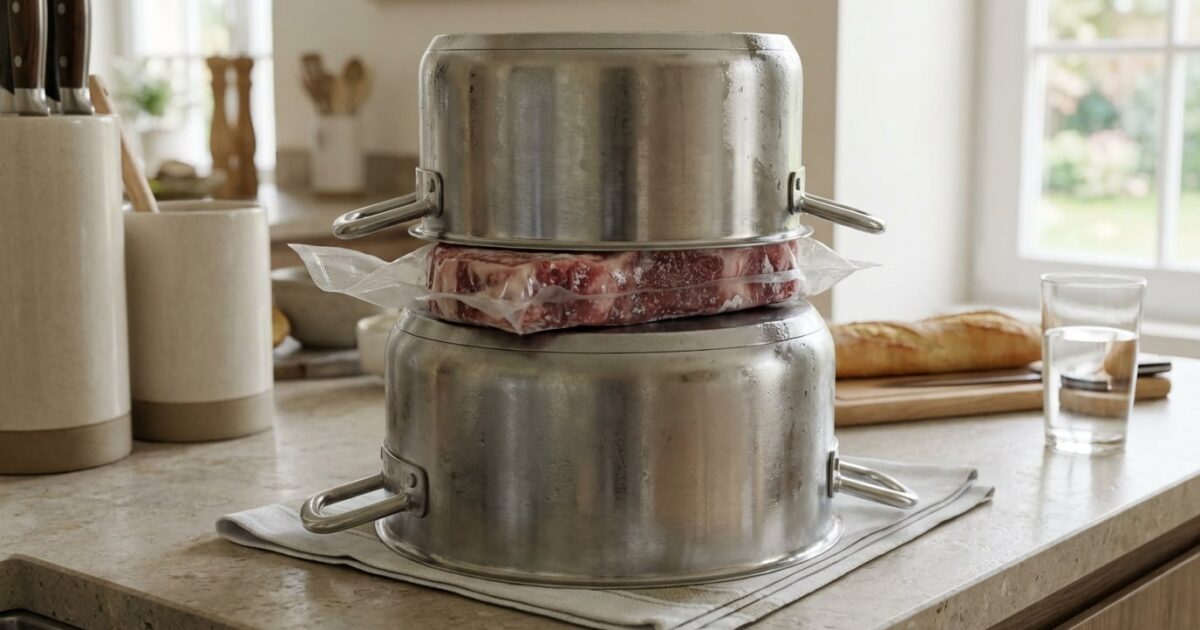
The 2-pot trick to defrost meat in a flash is a viral kitchen hack that can thaw a steak in as little as 10 minutes using nothing but two metal pots. It works, but only under precise conditions — and food safety specialists have clear warnings about when it goes wrong.
It's 7 p.m., you've just opened the freezer, and dinner is still a solid block. Most people reach for the microwave or leave the meat sitting on the counter, which food safety experts consistently flag as one of the riskiest moves in the kitchen. The 2-pot method offers a genuine middle ground: fast, appliance-free, and safe when used correctly.
How the 2-pot defrosting trick actually works
The technique is straightforward. You need two large metal pots or saucepans, clean and completely dry. Flip the first pot upside down on the countertop. Place the meat directly on it, still in its original packaging or a sealed freezer bag. Then set the second pot on top, bottom facing down against the meat.
That's it. No water, no heat, no electricity.
The physics behind the method
Metal is an excellent conductor of thermal energy. When the frozen meat sits between two metal surfaces, heat transfers from the room-temperature pots into the food far more efficiently than through air alone. The result: a steak haché or thin escalope can be fully defrosted in 10 minutes, while a standard cut takes roughly 30 minutes.
The key word here is thin. The method works because the metal conducts ambient heat evenly into a flat, relatively thin piece of meat. The process doesn't require any special equipment beyond what most kitchens already have.
What cuts work and what cuts don't
This is where many people go wrong. The 2-pot trick is designed for:
- Thin steaks, hamburger patties, chicken breasts
- Escalopes, fish fillets, thin galettes
It should never be used for roasts, whole chickens, or any thick cut where the exterior warms up while the core stays frozen. That uneven temperature gradient creates exactly the bacterial growth conditions that food safety specialists warn about. If you're planning something more elaborate, like a slow-cooked dish requiring a larger piece of meat, the refrigerator remains the only truly reliable option.
Never use the 2-pot method on thick cuts like roasts or whole poultry. The outside reaches unsafe temperatures while the center stays frozen, creating ideal conditions for bacterial growth.
The food safety context you need to understand
The reason this trick exists at all is that the two most common emergency defrosting methods, leaving meat on the counter and blasting it in the microwave, both carry real risks. Defrosting at room temperature allows bacteria to multiply rapidly on the outer layers of the meat, even while the center is still frozen. The result can be nausea, diarrhea, and fever, with children and vulnerable individuals facing the highest risk.
The microwave is faster but creates its own problems: uneven heating that partially cooks some sections while leaving others cold, affecting both texture and safety.
The reference method: refrigerator defrosting
Food safety specialists consistently recommend the refrigerator as the gold standard for defrosting. Small pieces need a minimum of 2 hours; larger cuts require planning ahead by a full day or more. Once thawed in the fridge, the meat must be cooked within 24 hours. It's safe, it's reliable, and it preserves texture better than any rapid method.
The cold water bath alternative
For situations where the fridge timeline doesn't work but the 2-pot method isn't suitable (say, for a 500 g cut that's too thick for metal conductance to work evenly), a cold water bath in a sealed airtight bag is a solid intermediate option. At that weight, roughly 30 minutes in cold water will do the job. The bag keeps the meat from absorbing water and protects it from contamination.
to defrost a thin steak or escalope using the 2-pot method
Rules that apply regardless of the method you choose
Two rules hold across every defrosting technique, and neither has exceptions. First, never refreeze meat that has already been thawed. The bacterial activity that occurs during defrosting makes refreezing genuinely dangerous. Second, cook any defrosted meat within 24 hours of thawing.
One additional note on the 2-pot method specifically: the weight of the upper pot can damage delicate foods. Soft fruits like berries or anything with a fragile structure will be crushed. The method is strictly for proteins with firm structure.
For anyone who wants to take kitchen technique seriously, small details matter across the board — whether it's getting a fried egg to release cleanly from the pan or understanding why defrosting shortcuts can undermine an otherwise well-prepared meal. The 2-pot trick is genuinely useful, but it earns its place in the kitchen only when used within its actual limits.
The 2-pot method is safe and effective for thin cuts only. Use dry metal pots, keep the meat in its packaging, and always cook the defrosted meat within 24 hours. Never refreeze.
The viral popularity of this trick on social media is understandable. It solves a real, everyday problem without any equipment investment. But the same logic that makes it work on a thin chicken breast makes it fail on a thick rôti — and that failure isn't just a culinary disappointment. If you're building a repertoire of reliable kitchen methods, pairing this trick with advance planning (and a better relationship with your refrigerator's lower shelf) is the most practical approach. Just as a well-structured recipe like authentic Moroccan harira rewards preparation time, so does proper defrosting.