
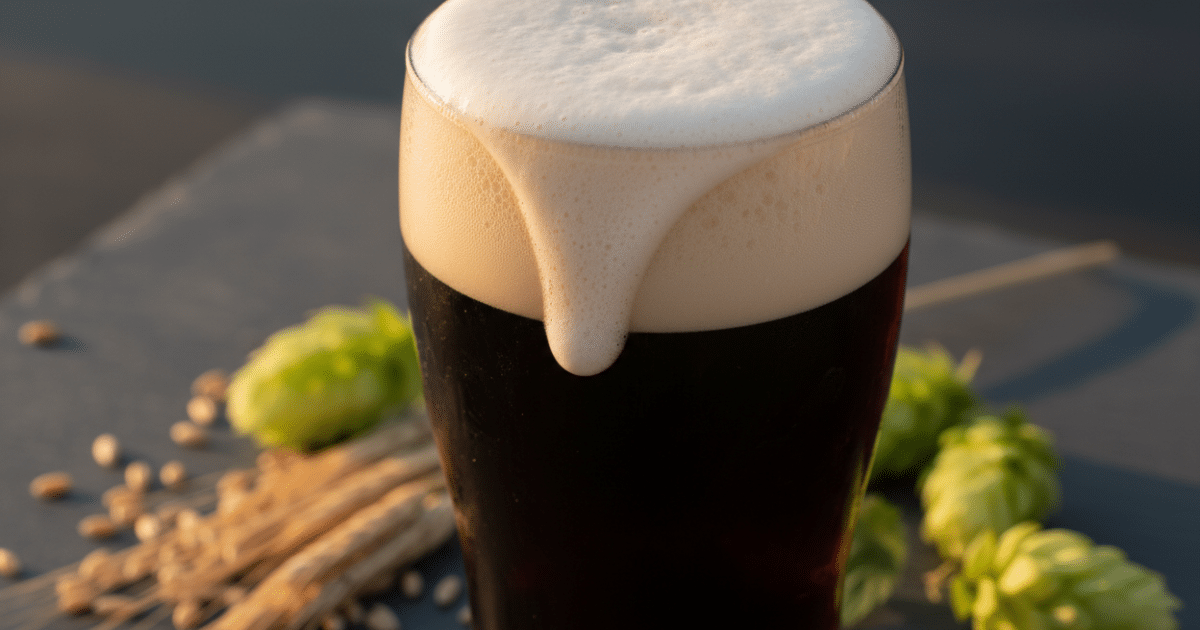
Guinness has a reputation as a heavy, meal-in-a-glass beer. The reality is more nuanced: a standard pint of Guinness Draught contains roughly 210 calories, making it one of the lighter options in the beer aisle. But calories alone tell only part of the story — the nutritional profile of this Irish stout is worth examining properly.
Guinness occupies a strange place in the popular imagination. Dark, opaque, topped with that iconic cream-colored head, it looks indulgent. Yet the calorie count sits well below most lagers and craft ales. This gap between perception and reality says something interesting — both about the beer itself and about how drinkers think about what's in their glass.
Understanding how many calories are in a pint of Guinness requires looking past the number on the label. The brewing process, the ingredients, the alcohol content, the carbohydrate structure — all of these shape what Guinness actually delivers nutritionally, and why it compares favorably to beers that look far less imposing.
The composition of Guinness shapes its caloric profile
Guinness Draught is brewed from four core ingredients: water, barley (both malted and unmalted), hops, and brewer's yeast. Simple on paper. But the way these ingredients interact during the brewing process determines the final nutritional output.
Roasted barley and the dark color myth
The deep mahogany color comes from roasted, unmalted barley — a signature of the Irish dry stout style. This roasting process is what gives Guinness its characteristic bitter, coffee-like flavor. Crucially, it contributes very little to the calorie count. Color and roast intensity are not proxies for caloric density. A beer can be jet black and still be relatively low in calories, which is exactly what Guinness demonstrates.
The alcohol content of Guinness Draught sits at 4.2% ABV — noticeably lower than many premium lagers (which typically run 5% or higher) and well below most craft IPAs. Since alcohol itself contributes 7 kcal per gram, this moderate ABV is the single biggest reason the pint stays around the 210-calorie mark. Alcohol accounts for the majority of calories in any beer; residual sugars and carbohydrates make up the rest.
Carbohydrates and residual sugars in Guinness nutrition
A pint of Guinness Draught contains approximately 17–18 grams of carbohydrates, with a relatively small fraction coming from residual fermentable sugars. The yeast consumes most of the sugars during fermentation, converting them to alcohol and CO₂. What remains is a mix of complex, non-fermentable carbohydrates that contribute body and mouthfeel without dramatically spiking the calorie count.
The nitrogen-infused dispense system — the widget in canned versions, the dedicated tap in pubs — also plays a role in the texture. That creamy, dense head is produced by dissolved nitrogen rather than CO₂. Nitrogen adds no calories whatsoever; it simply transforms the sensory experience, which partly explains why Guinness feels heavier than it is.
A standard pint (568 ml) of Guinness Draught contains approximately 210 calories, 17–18g of carbohydrates, 1.8g of protein, and negligible fat. ABV: 4.2%.
Guinness sits at the lighter end of the beer calorie spectrum
The comparison with other beer styles is where the Guinness calorie story becomes genuinely surprising. Most drinkers assume that stouts and porters are calorie bombs. The data says otherwise.
Calories in beer across different styles
| Beer style | Typical ABV | Approx. calories per pint |
|---|---|---|
| Guinness Draught | 4.2% | ~210 kcal |
| Standard lager (e.g. Heineken) | 5.0% | ~240–250 kcal |
| Premium lager (e.g. Stella Artois) | 5.0% | ~250–260 kcal |
| IPA (craft, 6–7% ABV) | 6.5% | ~300–330 kcal |
| Wheat beer (e.g. Hoegaarden) | 4.9% | ~230–245 kcal |
| Stout (Imperial, 8–10% ABV) | 9.0% | ~400–500 kcal |
These figures make the point clearly. A pint of Guinness delivers fewer calories than a pint of Heineken, fewer than a wheat beer, and roughly half the calories of an imperial stout. The comparison with craft IPAs is particularly striking — a single pint of a 6.5% IPA can contain 50–120 more calories than a Guinness.
Why lighter-looking beers can be more caloric
Pale lagers and golden ales look light in the glass, which creates a cognitive bias among drinkers. A clear, straw-colored pint reads as "less" — less heavy, less filling, presumably fewer calories. But if that lager runs at 5% ABV, it's already outpacing Guinness on the calorie count. Add a higher residual sugar content (common in sweeter lager styles) and the gap widens further.
This is a meaningful point for anyone thinking about the caloric impact of beer on their diet. Choosing by appearance is a poor strategy. The relevant variables are ABV first, residual carbohydrates second, and serving size third. On all three counts, Guinness Draught holds up well against most mainstream options.
per pint of Guinness Draught — less than most standard lagers
The perception of calories in alcoholic drinks influences consumer behavior
Beer occupies an awkward nutritional space. Unlike food, it carries no mandatory nutritional labeling in most markets (though this is changing in the EU). Drinkers navigate largely on instinct, which means misconceptions about calories in beer are widespread and persistent.
The "liquid bread" label and its caloric implications
Guinness has been called "liquid bread" since at least the early 20th century. The phrase stuck partly because of the stout's reputation for sustaining workers and nursing mothers — a claim Guinness itself marketed until the 1960s. The nutritional reality behind this slogan was always murky, but it cemented the idea that Guinness is somehow more substantial than other beers.
The irony is that this reputation may actually discourage some calorie-conscious drinkers from choosing Guinness, even though it would often be the smarter choice by the numbers. Perception here diverges sharply from reality. A drinker who switches from two pints of 5% lager to two pints of Guinness Draught saves roughly 60–80 calories without any sacrifice in flavor complexity or satisfaction.
How calorie awareness is reshaping beer choices
The rise of low-calorie and low-alcohol beer categories reflects a genuine shift in consumer priorities. Guinness Open Gate Brewery and other producers have responded with lighter variants — Guinness Zero (0.0% ABV, around 70 calories per pint) being the most prominent example. These products acknowledge that calorie content has become a purchasing criterion for a significant segment of drinkers.
But the more interesting development is the mainstreaming of nutritional transparency. Several major brewers now voluntarily publish full nutritional data, and EU regulations are pushing toward mandatory labeling. When drinkers have actual numbers in front of them, the instinctive association between dark beer and high calories tends to dissolve.
A “pint” in the UK and Ireland is 568 ml. In the US, a standard pour is often 473 ml (16 oz). The calorie figures discussed here refer to the UK/Irish pint. A US pint of Guinness Draught contains approximately 175 calories.
The culture around Guinness shapes how drinkers think about consumption
Guinness is not just a beer — it is a cultural artifact, particularly in Ireland and among the Irish diaspora. The ritual of the "perfect pint," the two-part pour, the waiting, the presentation: these practices slow down consumption and embed a certain mindfulness into the act of drinking. Whether intentional or not, this cultural framework has nutritional consequences.
Ritual, pace, and the psychology of moderation
The two-part pour of a Guinness Draught takes roughly 119.5 seconds according to the brand's own mythology. That's marketing, obviously, but it reflects something real about how Guinness is typically consumed — slowly, deliberately, in a pub setting rather than from a bottle at pace. Slower consumption tends to correlate with fewer drinks per session, which directly affects total caloric intake.
Compare this to the culture around certain craft beer styles, where tasting flights and rapid succession of small pours are the norm, or to the fast-drinking culture around cold lager at sports events. The social context of beer consumption is an underappreciated variable in any honest discussion of bières et calories. A 210-calorie pint consumed over 45 minutes in a Dublin pub is a very different nutritional event than four 240-calorie lagers consumed in two hours at a stadium.
Responsible drinking and the nutritional conversation
The broader conversation about Guinness nutrition and caloric awareness fits into a larger cultural reckoning with alcohol and health. Drinkers today are more likely than previous generations to factor calories, carbohydrates, and alcohol content into their choices. The success of "sober curious" movements and low-ABV categories confirms this.
Guinness, paradoxically, benefits from this shift. Its moderate ABV, relatively low calorie count, and the ritual pace of its consumption align well with a more considered approach to drinking. The valeur nutritionnelle de la bière is becoming a legitimate topic in food and drink journalism — and Guinness tends to come out ahead when the conversation moves beyond stereotypes. The dark pint that looks like a meal turns out, by the numbers, to be one of the more reasonable choices at the bar.